

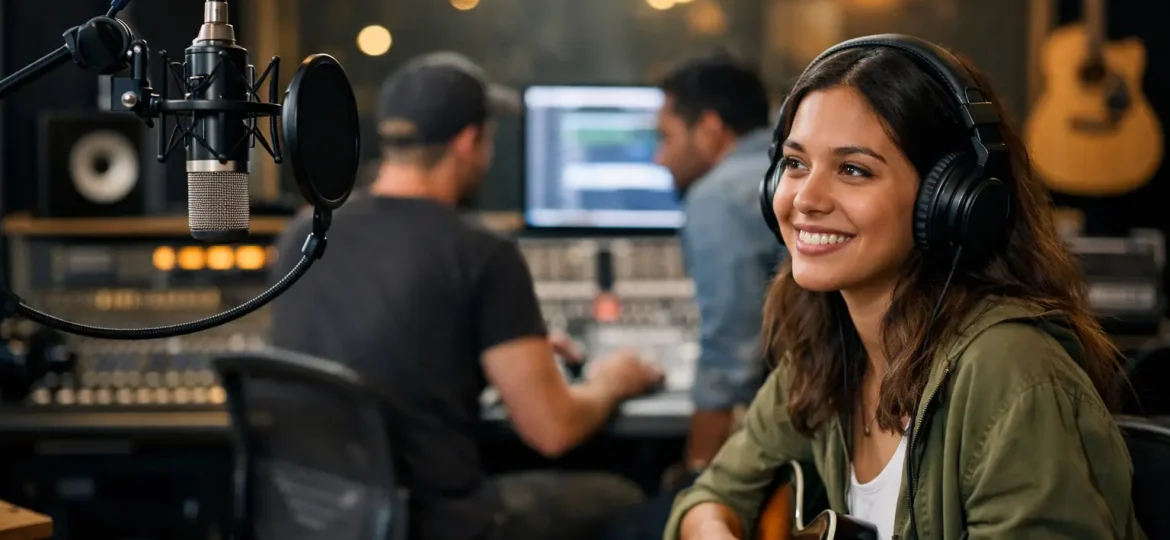
Your first recording session can feel like a big moment because it is. You have spent time writing, rehearsing, and imagining how the song should sound outside your head. The best tips for your first studio session are not about acting like a seasoned pro. They are about showing up prepared enough to make strong creative choices when the microphone is on.
A good studio gives you more than clean audio. It gives your ideas room to become a finished record. Come in ready to work, stay open to collaboration, and remember that a great take is usually built through focus, not pressure.
Best Tips for Your First Studio Session: Start Before You Arrive
The session starts long before you walk into the studio. The more decisions you make ahead of time, the more of your booked time can go toward performance, production, and getting the details right.
Know which song you are recording and what version of it you want to create. If you have several unfinished ideas, choose one that has a clear hook, structure, and direction. A first session is usually more productive when you focus on one strong song instead of trying to record three songs halfway.
Bring a reference track or two that helps explain your vision. You might like the vocal energy of one artist, the drum sound of another, and the overall mood of a third song. References are useful because they give the producer and engineer a faster read on the sound you are after. They are not a request to copy someone else. They are a starting point for building something that fits you.
Rehearse the Parts You Plan to Record
You do not need to perform every line with robotic precision. You do need to know the words, melody, tempo, and arrangement well enough that you can focus on delivery instead of trying to remember what comes next.
Practice with a metronome or instrumental if you can. This matters most for vocals, rap verses, guitar parts, and any section that needs to lock into a beat. If your song changes tempo or has an unusual structure, make a simple note on your phone so you can explain it clearly.
Also, be honest about what needs help. Maybe your chorus is solid but the second verse feels weak. Maybe you have lyrics but no finished melody. That is not a reason to wait. It is useful information. A hands-on producer can help you develop a section, tighten a lyric, or find the arrangement that makes the song land.
Communicate the Goal for the Session
Before recording begins, explain what success looks like for you. Are you trying to leave with a polished release-ready single? Do you need a strong vocal demo to pitch a song? Are you recording a rough version so you can build production around it later?
Those goals affect how the session should be used. A vocal demo may call for a simple arrangement and a confident performance. A commercial release may require more time for vocal layers, editing, production choices, mixing, and revisions. Neither goal is better than the other, but they should not be treated as the same project.
Be clear about your influences, but make room for the studio team to offer ideas. Sometimes the most useful feedback is practical: a key may sit too high for your voice, a lyric may need one more beat, or the chorus may need a bigger contrast from the verse. You are still the artist. Collaboration simply gives the song more tools to work with.
Protect Your Voice and Energy
Recording demands more from your voice than singing casually at home or performing one song for friends. You may repeat the same chorus ten times to capture the right tone, timing, and emotion. Show up rested, hydrated, and fed.
Avoid yelling, over-singing, or straining your voice the night before. Drink water throughout the day, but skip anything that leaves your throat dry or your energy unfocused. If you are a vocalist, give yourself a few minutes to warm up before serious takes begin. A simple scale, light humming, and breathing exercises can help you find a more controlled sound.
Your mental energy matters too. Do not schedule your first session immediately after an exhausting shift, a long drive, or a situation that has you distracted. Life happens, and sometimes you have to make the schedule work. Still, if you can choose, book a time when you can arrive alert and ready to create.
Bring Organized Materials, Not Just an Idea
Your phone is often enough to carry a demo, lyrics, voice notes, and reference tracks. The key is making sure you can find what you need quickly. Label demos clearly. Keep your lyrics in one document. If you have an instrumental, backing track, or beat stems, bring the correct files and confirm the version before the session.
For most artists, a high-quality WAV file is preferable to a compressed audio file when one is available. If you purchased or received a beat, bring the instrumental and any separate track files you have. Stems can give the mix more flexibility, but they are not always necessary for an early demo.
If you are recording live instruments, bring the instrument, cables, pedals, picks, batteries, or any specialty gear you rely on. Ask ahead if you are unsure what the studio provides. A little preparation keeps technical issues from eating into your creative time.
Do Not Chase One Perfect Take
Many first-time artists expect to sing or rap the entire song perfectly in one pass. Sometimes that happens. More often, professional recordings are created from multiple solid takes, carefully selected phrases, doubles, harmonies, and small adjustments.
That process is normal. If you miss a word, lose the emotion in one line, or want to try a different delivery, keep going. The goal is not to prove you can do everything in one shot. The goal is to create the best recording.
Try a full performance early in the session so everyone can hear the overall feel. Then work section by section where needed. You may discover that a loose first take has the best emotion, while a later take gives the cleanest chorus. Good production is often about choosing the right moments, not forcing one moment to carry the whole song.
Let Emotion Lead, Then Refine the Details
Technical accuracy matters, but a listener connects to feeling first. A perfectly timed vocal can still sound flat if the lyric has no intention behind it. Before recording a verse, decide who you are talking to and what you need the listener to feel.
Then listen back with an open mind. You may notice that a word needs more space, a phrase needs less force, or a chorus needs more confidence. Small changes can make a vocal sound natural instead of overworked.
Use Studio Time Wisely
Hourly sessions move quickly, so avoid spending twenty minutes debating a minor choice that can be tested in two minutes. Be decisive when you can, and ask questions when you need clarity. If you are unsure whether a harmony, ad-lib, or production idea works, record a quick version and listen back.
It also helps to set priorities. Your lead vocal or main performance should come first. If time allows, move into doubles, harmonies, background vocals, and creative extras. That way, you leave with the core of the song captured even if the session takes a different turn than expected.
Take short breaks when your ears or voice need one. Long sessions can make every take sound the same after a while. A few minutes away from the speakers can help you return with better judgment.
Be Ready for Honest Feedback
The right producer or engineer is on your side, not just watching the clock. At True Songs Productions, the process can include creative input on songwriting, arrangement, and performance as well as recording support. That partnership is valuable when you are willing to hear feedback without taking every suggestion as criticism.
You do not have to accept every idea. It is your song, and your instincts matter. But if someone points out that a lyric is unclear or a performance could go further, test the suggestion before dismissing it. The best sessions have mutual respect: the artist brings the vision, and the production team helps make it hit harder.
Ask What Happens After Recording
Recording is one stage of the project, not always the finish line. Before you leave, make sure you understand what comes next. Will the track be edited and mixed? Do you need to provide notes? When can you expect a review version? What files will you receive when the project is complete?
If you are planning a release, think beyond the audio. Cover art, short-form social clips, a music video, and a release plan can all shape how people discover the song. You do not need to solve every piece in one day, but a clear next step keeps your recording from sitting unfinished on a hard drive.
Your first session does not need to be flawless to be successful. It needs to move your music forward. Walk in with a prepared song, a clear goal, and enough confidence to try the take again when it counts. That is how an idea becomes something people can hear, feel, and remember.
