

A great song can start with a voice memo, a rough lyric, or one guitar part that will not leave your head. Turning that spark into a release-ready record is a different job. Artist development services give independent musicians practical creative support between the first idea and the moment listeners see and hear a finished project.
For emerging artists, the biggest obstacle is rarely a lack of talent. It is knowing what the song needs, how to make the performance land, which production choices fit the artist, and how to present the result professionally. Development is where those decisions get clearer.
What artist development services actually do
Artist development is not a preset package that makes every musician sound the same. It is a hands-on process that helps an artist identify what is already working and improve the pieces that are getting in the way. Depending on the project, that may include songwriting support, arrangement ideas, vocal coaching in the studio, production guidance, recording, and video planning.
A songwriter may arrive with strong lyrics but no clear chorus. A singer may have the right tone but need help finding a vocal delivery that feels confident instead of cautious. A band may have a live sound that needs a more focused arrangement before recording. The goal is not to replace the artist’s voice. The goal is to bring it forward.
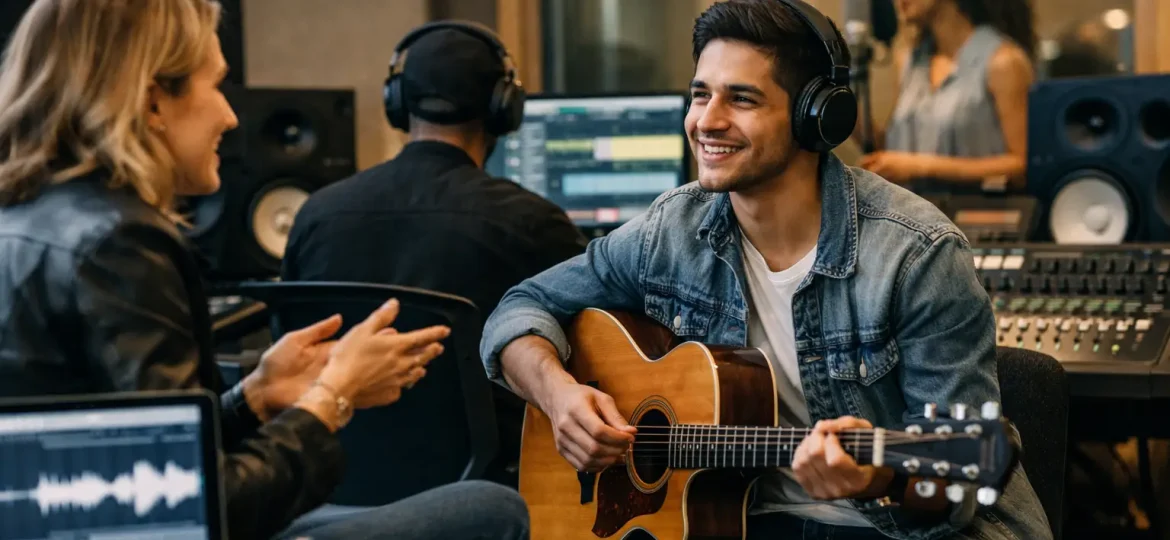
At True Songs Productions, that kind of support comes from working directly with a producer and musician who understands both the technical side of recording and the creative side of finishing a song. Studio time matters, but good feedback, strong collaboration, and a clear direction often matter just as much.
Development starts before the microphones are on
The most productive recording sessions begin with preparation. That does not mean every note must be locked in before an artist enters the studio. It means the artist and producer should know what they are trying to communicate.
Start with the song’s center. Is it the lyric, the hook, the vocal performance, the beat, or a guitar riff? Once that is clear, the arrangement can support it. A verse that feels crowded may need fewer instruments. A chorus that does not lift may need a stronger melody, added harmonies, or a change in dynamics. Small choices can make the difference between a decent demo and a song people remember.
This is also the time to discuss references. Reference tracks are useful when they describe a feeling, energy, or sonic direction, not when they are used as a blueprint to copy. Saying you want a vocal to feel intimate, punchy, cinematic, raw, or radio-ready gives the production process a place to begin.
Songwriting support can save a good idea
Many artists wait too long to ask for help with a song because they think collaboration means giving up ownership. In reality, a good creative partner can help an artist protect the best part of the original idea.
That may mean tightening a lyric so it is easier to sing, rewriting one line that breaks the rhythm, building a pre-chorus that creates tension, or finding a chorus title that listeners can repeat. Sometimes the right move is to simplify. A song does not need five ideas when one honest idea can carry the entire record.
The trade-off is personal preference. Some artists want detailed input on every section, while others want to arrive with a finished song and focus only on performance and production. Both approaches work. Development should meet the artist where they are, not force them into a process that does not fit.
Recording is about performance, not just equipment
Professional microphones, treated rooms, and quality software are valuable, but equipment alone does not create an engaging record. The best recording sessions create enough comfort for an artist to take risks and enough structure to keep the project moving.
A vocalist may need several passes to find the take that has the right emotion. Another singer may deliver their best performance in short sections rather than one full take. A producer can help decide when to push for another version and when to recognize that the honest, imperfect take has the most life.
This is especially important for first-time artists. Recording can feel exposing. Hearing your voice played back through studio monitors is different from singing in a car or posting a quick clip online. A collaborative studio environment helps artists get past that first layer of self-consciousness and focus on the song.
Instrumental production deserves the same attention. Beats, bass lines, keys, guitars, and programmed elements should create movement without competing for the same space. More tracks do not always mean a bigger sound. The right parts, played or programmed with purpose, make a record feel complete.
Why video belongs in the development process
Listeners often meet an artist visually before they hear a full song. A music video, performance clip, teaser, or social media edit can shape expectations before the first chorus arrives. That is why audio and video work better when they are planned together.
A polished visual does not need to be expensive for the sake of being expensive. It needs a concept that matches the artist and the song. A personal acoustic track may call for a simple performance video with strong lighting and close shots. An energetic hip-hop or pop release may need movement, locations, styling, and sharper edits. The best approach depends on the music, the release plan, and the audience the artist wants to reach.
Planning video during production can also improve efficiency. The artist can schedule recording, photography, video, and promotional content around the same release timeline instead of scrambling for visuals after the song is already finished. For Houston-area artists, working with a studio that handles both recording and videography can keep the creative direction consistent from the first session to the final upload.
Artist development services should create usable results
Development should lead to more than a conversation about potential. By the end of a project, an artist should have clearer material, stronger performances, and assets they can actually use to build momentum.
That can include a finished single, professionally recorded vocals, a polished mix, a music video, short promotional clips, or a plan for what comes next. Not every artist needs every service at once. Someone preparing their first single may benefit most from songwriting and recording support. An artist with several completed tracks may be ready to focus on video content and a more unified presentation.
The key is choosing the next right step instead of trying to do everything at once. Releasing one well-developed song with visuals and a clear message can do more for an emerging artist than rushing out a collection of unfinished ideas.
Know when development is worth the investment
Artist development is most valuable when you feel close to a finished idea but cannot get it across the line alone. Maybe your demo has potential but lacks energy. Maybe you keep rewriting the same song without solving the real problem. Maybe you know your music deserves a better presentation than a phone recording and a random photo.
It is also useful when you are ready to take your work more seriously. That does not mean you need a large following, a label, or a perfect plan. It means you are willing to listen, make decisions, practice your material, and put time into getting the details right.
Come prepared with your lyrics, demos, reference tracks, and honest goals for the release. Then leave room for the song to become better than the version you first imagined. The right creative support will not make you sound like someone else. It will help listeners hear more clearly what you have been trying to say all along.
