

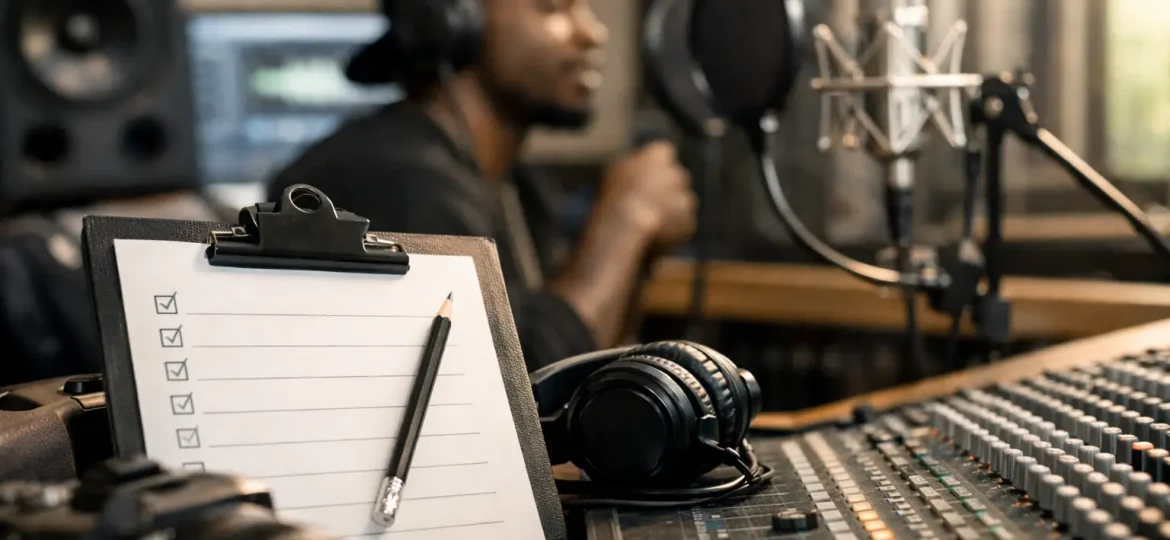
A great recording session rarely starts when the red light turns on. It starts with the choices you make the day before: finishing the lyric, practicing the hard section, organizing your files, and deciding what you want the song to feel like. This studio session checklist Houston artists can use is built to help you spend less time getting ready in the room and more time making a record you are proud to release.
Whether you are tracking your first single or building a full project, preparation protects your budget and gives the creative process room to work. You do not need to have every answer before you arrive. You do need a solid starting point.
Start With a Clear Goal for the Session
Do not book time with the vague plan to “work on music.” Decide what success looks like for this specific session. Maybe you need to record final lead vocals for one song. Maybe you want a strong demo that helps you pitch an idea to collaborators. Maybe the goal is production direction, with time to test tempos, keys, or arrangement choices.
Your goal affects everything else: how much studio time you should reserve, which files to bring, whether you need an instrumental ready, and how much energy you should save for performance. A finished vocal for one song can be a realistic target in a focused session. Recording and fully producing three songs in one afternoon usually is not, unless the material is unusually simple and well rehearsed.
Write down your priority before you arrive. If time gets tight, everyone in the room can make decisions around what matters most.
Prepare the Song Before You Record It
A studio can improve the sound of a performance, but it cannot replace preparation. Know the structure of your song: intro, verse, pre-chorus, chorus, bridge, outro. If you have changed lyrics recently, print them or keep one clean, easy-to-read version on your phone or tablet.
Practice to the exact instrumental or tempo you plan to use. A vocal that feels effortless over a phone speaker can feel different when you hear every detail in headphones. Pay attention to where you run out of breath, where consonants get rushed, and where your pitch tends to drift. Those are not reasons to panic. They are places to rehearse with intention.
If you are still writing, bring options. Two possible hook lines or a few alternate verses can be useful. But avoid arriving with an unfinished song and expecting the session to solve every writing decision. Creative collaboration can sharpen a good idea, yet it works best when there is enough material to build from.
Bring the Right Files and References
Technical preparation keeps the room moving. Bring your instrumental as a high-quality WAV file whenever possible, not only an MP3 pulled from a text message. Label it clearly with the song title, version, tempo, and key if you know them. For example: `Night Drive_92BPM_Amin_Final.wav`.
If your producer or engineer will be building the track, bring any demos, voice notes, chord charts, lyric sheets, or rough beats that explain the direction. A simple phone demo can communicate melody and emotion better than a long verbal description.
You should also bring two or three reference songs. Choose references for specific reasons. One may have the vocal intimacy you want. Another may have the drum energy or low-end weight you like. A third may help explain the kind of vocal effects that fit your style. References are not templates to copy. They give the production team a shared language for the target.
Before your session, confirm how to send large files and where final mixes or session materials will be delivered. A few minutes spent organizing files can save a surprising amount of paid studio time.
Take Care of Your Voice and Energy
Your instrument comes with you. Treat it like part of the session setup.
Get sleep the night before, drink water throughout the day, and eat something that gives you steady energy. If you are recording vocals, limit anything that leaves your throat dry or irritated. That can mean avoiding a late night, heavy smoking, excessive alcohol, or shouting over loud music before your session.
Warm up gently before you start. You do not need a dramatic routine, but humming, lip trills, light scales, and a few passes through the melody can help you settle in. Avoid pushing full volume before you have heard yourself in the headphones and found a comfortable monitoring level.
There is a trade-off here. Some singers want a raw, tired, emotional edge in a vocal. That can be a valid artistic choice. It should be intentional, not the result of arriving exhausted and hoping the take survives. If a demanding song requires big notes or long sessions, schedule your hardest vocals early, when your voice is fresh.
What to Bring to the Studio Session
Keep your setup simple, but do not rely on memory. Bring the practical items that support the work:
- Your lyric sheet, notes, and reference tracks
- High-quality beat files, demos, or stems
- Water and a light snack
- Headphones if you have a pair you know well, though the studio may provide them
- A charged phone and charger for notes, files, and communication
- Any instrument, adapter, tuner, or specialty gear you specifically plan to use
If you play guitar, bass, or another live instrument, check strings, batteries, cables, and tuning before you leave. If you use backing vocals, know which parts are essential and which can be added later. Preparation does not mean bringing every possible idea. It means bringing what you need to make confident decisions.
Arrive Ready to Collaborate
A productive session is not a test you have to pass. It is a working conversation between the artist, producer, and engineer. Be honest about what you hear. If the vocal feels too polished, too aggressive, too dark, too bright, or simply not like you, say so early.
At the same time, leave room for input. The best production choices are often discovered while tracking: a stronger melody variation, a dropped word that makes the hook hit harder, a harmony that opens the chorus, or a different microphone approach that better fits the voice. You are still in charge of your song, but you do not have to carry every creative decision alone.
At True Songs Productions, that hands-on approach matters. The goal is not just to capture sound. It is to help turn a strong idea into a finished piece that represents you well.
Use Your Studio Time Wisely
When the session begins, start by confirming the song version, tempo, key, and target sound. Record a quick test pass so you can adjust the headphone mix. You may need more beat, less reverb, or a little more of your own vocal in the headphones to perform naturally. Small monitoring changes can make a major difference in confidence and pitch.
Record the core performance first. For most vocal sessions, that means lead vocals before stacks, doubles, ad-libs, and effects. Do not spend an hour perfecting background details if the lead has not landed yet. A compelling lead vocal gives the entire record its center.
Do several takes rather than trying to force one perfect pass. The strongest final vocal may be built from the best moments across multiple takes. Keep your focus on emotion, timing, clarity, and believable delivery. Technical polish matters, but people remember whether they felt something.
If you hit a wall, take a short break. Ten minutes away from the microphone can reset your ears and your performance. Pushing through fatigue sometimes produces a usable take, but it can also create more editing work and frustration. Know the difference.
Review Before You Leave
Do not rush out as soon as the last take is recorded. Spend a few minutes listening back to the important sections. Check that the lyrics are correct, the lead vocal feels complete, and any must-have doubles or ad-libs were actually captured. If there is one line you are unsure about, fix it while the microphone and session are already open.
Ask what happens next. Will the track be edited, mixed, mastered, or sent to you for review? Is there anything the producer needs from you, such as revised lyrics, a feature vocal, cover art direction, or approval on a version? Clear next steps keep a good recording from sitting unfinished on a hard drive.
Also ask for a rough mix or reference bounce if that is part of the workflow. It gives you something to listen to outside the studio and helps you catch creative notes before final mix decisions are made.
Give the Song Room to Become Better
The most valuable thing you can bring into a recording session is not expensive gear or a perfectly rehearsed image. It is a prepared song, an open mind, and the willingness to make choices that serve the record. Show up ready, communicate clearly, and let the session do what it is supposed to do: turn your ideas into something people can hear and feel.
