

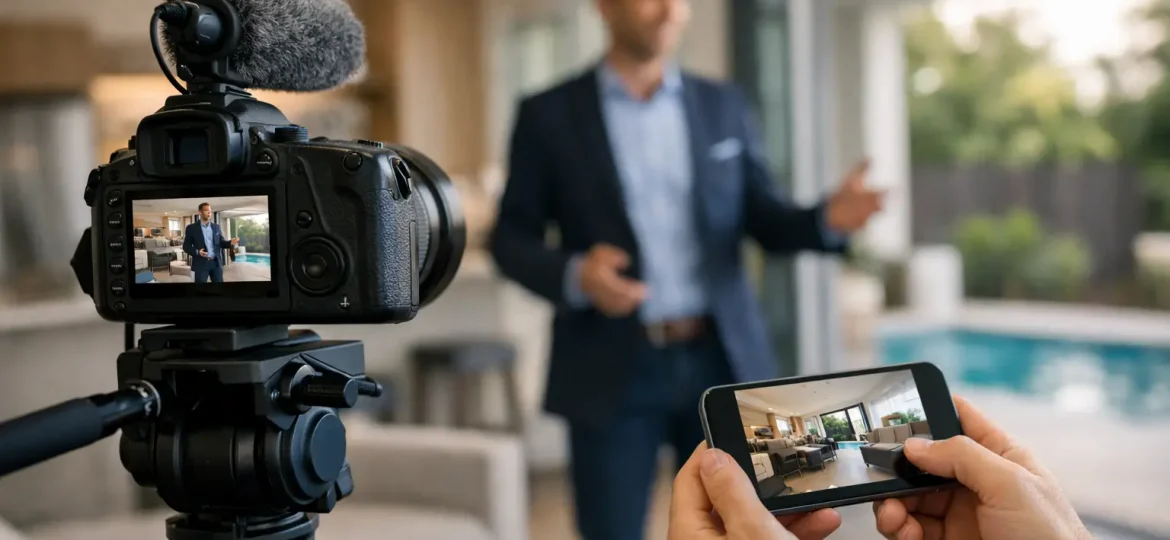
A buyer can scroll through twenty listing photos in a few minutes. A well-made real estate video for listings gives them a reason to stop, picture their routine in the space, and take the next step. It shows how the kitchen opens to the living room, where the natural light lands in the afternoon, and what a backyard actually feels like beyond one wide-angle image.
For agents, builders, and property owners, video is not just a decorative add-on. It is a practical sales tool. The right production helps a listing look more complete, creates better social media content, and gives serious buyers a clearer sense of whether the property is worth seeing in person.
Why Real Estate Video for Listings Works
Photos are still essential. Buyers use them to scan rooms, compare finishes, and revisit details. Video does something different: it creates movement and context. Instead of seeing a living room as a single frame, viewers understand its connection to the dining area, entryway, and patio.
That matters because a property is experienced as a sequence of spaces. A thoughtful walkthrough can make a compact home feel efficient, a large home feel connected, and a unique feature feel intentional rather than hard to understand. It also helps reduce the gap between what a buyer expects online and what they encounter at a showing.
A strong listing video can support more than the property page. Short cuts can be used for social posts, agent marketing, email campaigns, open-house promotion, and paid advertising. One shoot can provide a library of visual assets rather than a single piece of content.
The goal is not to make every house look like a luxury estate. The goal is to make the home look its best while presenting it honestly. Buyers appreciate polish, but they also need a clear, believable view of the property.
Start With the Story of the Property
The best real estate videos are not random tours of every room. They have a point of view. Before the camera comes out, decide what makes the listing worth remembering.
For one property, the story may be easy access to a Houston job center, strong indoor-outdoor living, or a renovated kitchen built for entertaining. For another, it may be the quiet primary suite, the oversized lot, or a layout that works well for a growing family. The video should lead viewers toward those strengths instead of treating every corner with equal weight.
A two-bedroom condo may need a clean, fast walkthrough that emphasizes light, storage, and location. A larger custom home may deserve more time on architectural lines, landscaping, pool space, and the way its rooms connect. The format depends on the listing, the likely buyer, and the channels where the video will appear.
Plan the shoot before production day
Preparation is where a smooth production starts. A camera cannot fix a cluttered counter, dead landscaping, or a room that has not been staged for the way it will be shown. The home does not need to look artificial, but it should look ready for a buyer’s attention.
Before filming, handle the basics:
- Turn on lights, replace burned-out bulbs, and open blinds when the view and daylight help the room.
- Clear personal photos, pet items, excess countertop appliances, and visual clutter from key areas.
- Set outdoor furniture, clean the pool if applicable, and make the front entry look inviting.
- Confirm access to every room, garage, yard, amenity area, and community feature being included.
It also helps to walk the property with the production team. Point out upgrades that may not be obvious on camera, such as custom cabinetry, smart-home controls, high-end appliances, or a hidden storage area. Those details may shape the shot plan or the narration.
What a Strong Listing Video Should Include
A polished real estate video usually opens with a clear first impression. That may be a clean exterior shot, a view of a major architectural feature, or a quick moment that establishes the neighborhood setting. The opening should tell viewers they are about to see something worth their time.
From there, the footage should move naturally through the home. A good sequence respects how someone would actually enter and explore the space. It does not need to document every closet, but it should answer the questions a serious buyer will have about layout, scale, condition, and lifestyle.
Feature shots add personality. A close view of a gas range, a fireplace detail, a soaking tub, or sunlight across hardwood floors can give the video texture. These shots work best when they support the larger story rather than interrupt it.
Outdoor areas deserve real attention, especially in a market where patios, pools, outdoor kitchens, and usable yards can influence a buyer’s decision. If the listing benefits from aerial footage, it can show lot size, nearby green space, water views, or the relationship between the home and the neighborhood. Aerial shots should be purposeful, not included simply because a drone is available.
Music can help establish pace and mood, but it should never overpower the property. For agent-led videos, on-camera introduction and brief commentary can build trust, especially when the agent can speak naturally about the home and who it fits. For some listings, a clean visual tour with simple text is the better choice. It depends on the brand, price point, and where the final video will be used.
Avoid the Common Mistakes That Weaken Video
The most common mistake is trying to show too much. A long, unedited walk through every room can lose a viewer before the best features appear. A listing video should feel complete, but it should also move with purpose.
Another problem is overusing dramatic camera moves or effects. Smooth motion is valuable because it helps viewers understand a room. Constant spinning, fast transitions, and heavy color treatment can make the video feel more like a music promo than a useful real estate asset. Creative production should serve the listing, not distract from it.
Poor lighting can also undermine a good property. Mixed color temperatures, dark corners, and blown-out windows can make a space feel smaller or less inviting than it is. Professional camera work, lighting judgment, and careful editing make a measurable difference here.
Finally, do not let the video create an expectation the home cannot meet. Wide lenses and polished editing are normal production tools, but the result should remain accurate. The strongest marketing builds excitement without creating disappointment at the showing.
Choose the Right Length and Deliverables
There is no single ideal runtime. A short vertical social video may be 20 to 45 seconds and focus on a few attention-grabbing features. A standard listing film may run one to two minutes. A larger or higher-end property may justify a longer edit, particularly if it includes an agent introduction, lifestyle footage, or neighborhood context.
The smart approach is to plan for more than one version. A horizontal main video can work well for a website, listing presentation, or YouTube. Vertical cuts are better suited to Instagram Reels, TikTok, and Stories. Short teasers give agents something fresh to post before an open house or price update.
Captions and on-screen text are also worth considering. Many viewers watch social content with the sound off. Brief text can reinforce the essentials: location, bed and bath count, signature upgrades, or an invitation to schedule a showing. Keep it readable and limited. The home should remain the focus.
Work With a Video Team That Understands the Goal
Real estate production is about more than operating a camera. The team needs to understand pacing, composition, editing, sound, and how to make a property feel welcoming without misrepresenting it. Just as important, they need to work efficiently around listing schedules, occupied homes, weather, and the practical needs of an agent preparing to go live.
At True Songs Productions, we bring a creator-led approach to property video, combining professional visual production with the same attention to rhythm, detail, and presentation that goes into our other video work. We help shape the shoot around the listing so the final piece feels polished, clear, and ready to use.
A great property deserves more than a quick pass through the rooms. Give buyers a reason to imagine themselves there, then give them a clear reason to call.
