

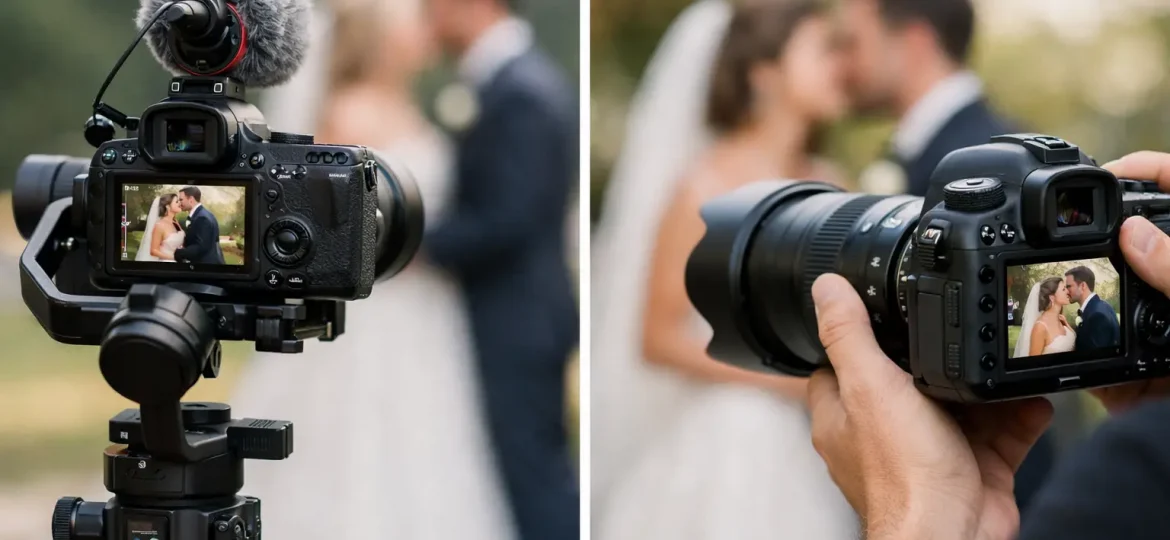
The first look lasts seconds. A photograph can hold the expression forever, while a video captures the shaky breath, the laughter right after, and the words neither of you may remember hearing in the moment. That is the real choice in wedding videography vs wedding photography: not which service is better, but which memories you want to revisit and how you want to experience them.
For many couples, the answer is both. But budgets are real, schedules get tight, and every wedding has different priorities. Understanding what each medium does best makes it easier to invest with confidence.
Wedding Videography vs Wedding Photography: The Core Difference
Wedding photography preserves individual moments. It gives you a polished image of the dress, the ceremony kiss, family portraits, the table details, and the dance floor at its best. Photos are easy to print, frame, share, and revisit in a few seconds. They become part of your home and often become the images your family passes down.
Wedding videography preserves movement, sound, and sequence. You do not just see your father walking you down the aisle. You hear what he says before the doors open. You see your partner’s reaction during the vows and watch your grandparents moving across the dance floor. A well-edited wedding film turns separate moments into a story with pacing, music, ambient sound, and emotion.
Photography is often about the iconic image. Videography is about reliving the atmosphere around it.
What Wedding Photography Does Best
A skilled photographer can create beautiful images in a fraction of a second. That matters during fast moments such as the first kiss, bouquet toss, or a quick glance between the couple during dinner. Photography is also more flexible when it comes to portraits. A photographer can guide you into flattering light, adjust a pose, and create a clean, timeless image without asking you to perform for the camera.
Photos are especially valuable when visual detail matters most to you. Maybe you spent months choosing your flowers, invitations, cake design, or attire. Maybe family portraits are a priority because relatives are traveling in from different states. Photography makes those details easy to preserve and easy to display.
It is also the more familiar wedding investment. Most couples expect to hire a photographer, and many venues build a photo window into the day’s timeline. If you can choose only one service, photography is usually the practical starting point because it delivers a broad record of the day in a format everyone knows how to use.
That does not mean photos are emotionally limited. The best photographers catch real tears, joy, and quiet in-between moments. They simply cannot preserve the sound of your vows or the rhythm of a toast that had the whole room laughing.
What Wedding Videography Does Best
Video is strongest where sound changes the meaning of the moment. Personal vows, a parent’s speech, a prayer, a live performance, and the cheers after your ceremony all carry emotional weight that a still image cannot fully translate.
A wedding film also helps you see parts of the day you missed. Couples are busy from the moment they start getting ready. You may not see your guests arrive, the reaction during the first dance, or your spouse’s expression while you are walking down the aisle. Video gives you access to the full experience, not just the moments you personally witnessed.
This is why videography often becomes more meaningful over time. On the wedding day, you may be focused on staying on schedule and greeting everyone. Months or years later, hearing familiar voices can become the part that matters most. That is particularly true for couples who value family stories, meaningful speeches, or music as a major part of their celebration.
A wedding video does require trust in the editing process. The final film is not simply raw footage placed in order. It is a creative production shaped by shot selection, audio quality, color, pacing, and music. Ask what style the videographer creates: documentary, cinematic, short highlight film, full ceremony edit, or a mix of those formats.
Cost, Coverage, and the Reality of the Timeline
Videography and photography can look similar on a quote, but they involve different production demands. A photographer can often cover a wedding effectively as one person, depending on the size of the event. Video may require multiple cameras, dedicated audio equipment, lighting, and a second shooter to capture both partners’ reactions during the ceremony.
Editing also works differently. A gallery may include hundreds of finished photos. A wedding film may be only five to 10 minutes long, but each minute can involve many hours of reviewing footage, syncing clean audio, color correction, and story-driven editing. A longer documentary edit requires even more post-production work.
When comparing packages, do not focus only on the number of hours. Ask what is actually delivered. For photography, that may mean the number of edited images, print rights, an engagement session, or a second photographer. For video, clarify whether you receive a highlight film, full ceremony footage, full speeches, social-media clips, raw footage, or separate audio recordings.
Coverage timing matters too. If you want the getting-ready energy, private letter readings, and a full exit, you need enough hours to capture them. If your main priority is the ceremony and speeches, a shorter video package may give you exactly what you need without stretching the budget.
When One Service Should Take Priority
If your budget only allows one, choose based on what you will regret missing.
Photography may be the better fit if framed images, family portraits, and visual details are your biggest priorities. It is also a strong choice for a smaller wedding where the emotional impact comes from candid interactions that can be preserved in still images.
Videography may deserve priority if your ceremony includes personal vows, loved ones giving meaningful speeches, cultural traditions, or live music. It can also be the right call when important guests may not be able to attend in person. A thoughtful film lets them experience more than a photo gallery can provide.
There is no wrong answer, but there is a common mistake: treating video as an optional extra without considering what disappears when the day is over. The music stops, the voices fade from memory, and many moments happen too quickly to absorb. If those elements matter to you, make room for them in the plan.
Why Hiring Both Can Work Better
When a photographer and videographer work well together, they protect each other’s ability to do great work. They coordinate around the ceremony, share portrait time without competing for it, and avoid getting in each other’s shots. The result feels calmer for the couple and more complete in the final gallery and film.
The key is hiring professionals who respect the timeline and understand live events. Weddings do not offer retakes. Audio has to be captured cleanly the first time. Lighting can change quickly, and family portraits need clear direction without turning the day into a production set.
For Houston-area couples who want a creator-led team that understands both music and video, True Songs Productions brings a production mindset to capturing the sound, energy, and story of the day.
Questions to Ask Before You Book
Ask to see full examples, not just a highlight reel or a handful of favorite images. A polished 60-second clip can show style, but a full wedding film shows how someone handles ceremony audio, speeches, low-light receptions, and transitions through the day.
You should also ask how they work with other vendors, what backup equipment they bring, how long delivery takes, and who will actually be filming or photographing your wedding. Confirm the deliverables in writing and make sure the package reflects the moments you care about most.
Most of all, choose people whose work makes you feel something. Your wedding media should not just prove that the day happened. It should bring you back to the room, the people, and the promise you made when it matters most.
