

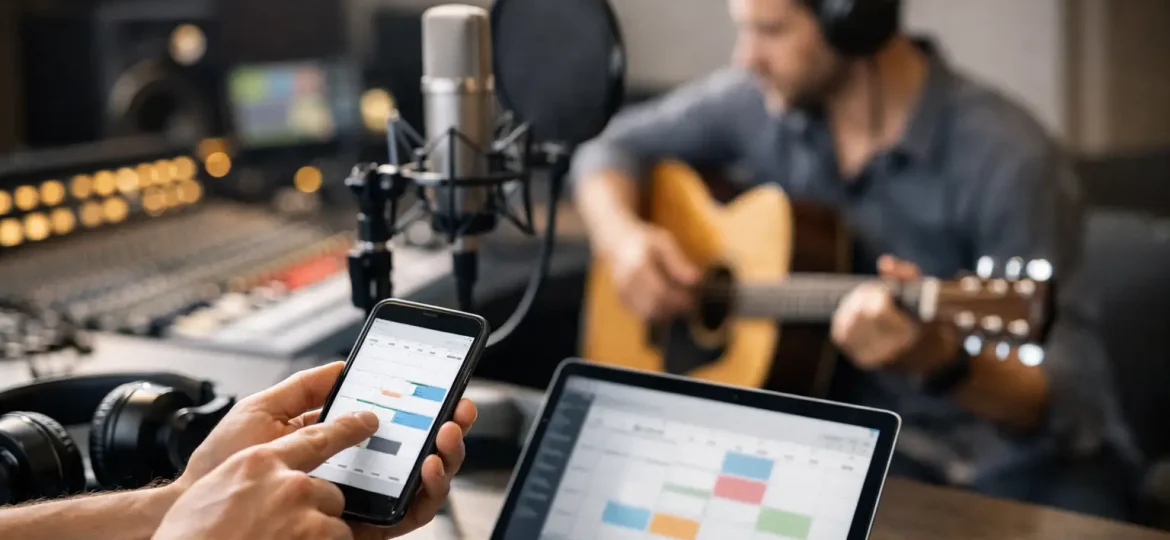
A great vocal take can happen in 10 minutes. Getting to that take may take an hour of setup, warming up, trying a new melody, and deciding what the song actually needs. That is why knowing how to book studio time is less about finding an open date and more about arriving with a plan that protects your budget and your creative momentum.
Whether this is your first recording session or your next release, the goal is the same: walk out with meaningful progress, strong audio, and a clear next step. A little preparation helps the engineer and producer spend their time making your music better instead of chasing down missing files or guessing at the direction.
Start With the Song, Not the Calendar
Before you ask for a date, get specific about what you want to accomplish. “I want to record” is a starting point, but it does not tell a studio how much time to reserve or what support you may need. Are you tracking a finished song with a practiced vocal? Building a beat from scratch? Recording a demo to pitch to another artist? Cutting vocals over an existing instrumental? Each project calls for a different kind of session.
A polished vocal recording over a final instrumental may fit into a shorter block if you know the song well and have rehearsed it. A session that includes songwriting, production ideas, harmonies, comping multiple takes, or live instruments deserves more room. Trying to squeeze a full creative process into a single hour can make everyone rush at the exact moment the song needs patience.
Be honest about where the song is right now. A studio can help refine lyrics, shape a melody, or improve an arrangement, but that is different from simply recording a performance. Neither approach is wrong. The key is booking the time and creative support that match your actual goal.
How to Book Studio Time With the Right Scope
When you reach out to a studio, explain the project in plain language. Share the genre, the number of songs, and whether you have an instrumental, reference track, or rough demo. Let them know how many people will attend and whether you need recording, production, mixing, or creative guidance. Those details make it easier to recommend a session length that makes sense.
It also helps to ask what is included in the hourly rate. Studios do not all structure services the same way. One session may include an engineer and basic recording setup, while production, editing, mixing, instrumentals, or extra musicians may be separate services. Ask whether your booked time includes setup and playback, how files are delivered, and what happens if you need revisions after the session.
Do not book based on the lowest number of hours alone. A short session can be a smart choice for a simple task, such as recording a single voiceover or updating a few vocal lines. But if you are recording your first single, a longer session may be the better value because it gives you time to settle in, make creative choices, and capture options. The best session length depends on preparation, song complexity, and how finished you want the work to be when you leave.
For Houston-area artists who want support beyond the microphone, True Songs Productions can help shape the recording as well as capture it. That hands-on approach is especially useful when you have a strong idea but need a producer or collaborator to help bring it into focus.
Choose a Session Length That Fits the Work
Think in stages. Tracking is the time spent recording vocals, instruments, and other performances. Editing tightens the best takes and handles details such as timing or cleanup. Mixing balances the song so it translates from studio speakers to phones, cars, and headphones. Mastering is a separate final stage that prepares the finished mix for release.
If your session is focused on tracking, do not expect a final release-ready master by the end of the same hour unless that has been specifically planned. It is possible to make fast progress, but quality production usually benefits from listening with fresh ears after the recording is done.
Give yourself a little margin, particularly if you are new to recording. The first 20 to 30 minutes often go toward getting comfortable on the mic, checking headphone levels, testing effects, and finding the right performance energy. That is productive time, not wasted time. Booking enough room for it keeps you from watching the clock while trying to sing your best.
Prepare Before the Clock Starts
The most valuable studio hour is the one you do not spend looking for a file, rewriting an entire verse, or learning the song for the first time. Rehearse until you can perform without constantly reading from your phone. You can still bring lyric notes, but familiarity gives you more freedom to focus on tone, emotion, and delivery.
Bring your instrumental or session files in the format the studio requests. If you bought a beat, make sure you have the correct version and permission to use it. If you recorded a demo at home, bring that too. A rough reference can show the producer what you like about the original idea, even if the final version takes a different direction.
A few practical details make a noticeable difference:
- Save your tracks in more than one place, such as your phone and a cloud folder.
- Bring reference songs that match the vocal sound, energy, or mix style you want.
- Avoid arriving vocally exhausted from rehearsing at full volume all day.
- Wear comfortable clothing and bring water so you can stay focused through multiple takes.
- Plan transportation and arrive early enough to start calmly, not rushed.
Reference songs are not about copying another artist. They give the studio a shared language. Saying you want the vocal to feel intimate, aggressive, airy, dry, or heavily produced is useful. Letting the team hear an example makes the direction even clearer.
Confirm the Details Before You Commit
Once you have a proposed date and session length, confirm the basics in writing. Know the start and end time, the rate, any deposit requirement, cancellation or rescheduling policy, and the payment method. If you are bringing guests, ask whether the space is set up for them. A crowded control room can affect focus, especially during vocal recording.
You should also clarify what you will receive afterward. Will you get a rough mix, exported vocal stems, a final stereo file, or a follow-up date for mixing? If you plan to shoot content for the release, ask about that early. Recording and video production can work well together, but each needs proper time, lighting, setup, and a clear creative concept.
Good communication is part of good production. If your schedule changes or the song is not ready, say so as early as possible. Rescheduling to protect the quality of the work is often smarter than forcing a session before you are prepared.
Use the Session to Make Decisions
A studio is a creative workspace, not just a room with a microphone. Be open to trying a different harmony, changing a line that is not landing, or recording one more take when the energy is right. At the same time, do not chase perfection until the session loses its spark. Strong recordings usually come from a balance of preparation and instinct.
Ask for playback at key moments, but trust the process. The first take may have the best emotion. The fifth may have the cleanest phrasing. Recording several options gives the producer material to shape into a confident final performance.
At the end of the session, take a few minutes to discuss what happens next. Decide whether the song needs editing, mixing, another vocal pass, or a visual plan for release. Leaving with that direction keeps a good session from becoming an unfinished file that sits on a hard drive.
Book time that gives your music room to breathe, then show up ready to create. The right studio session should make you sound better, feel more confident, and move your idea one real step closer to being heard.
