

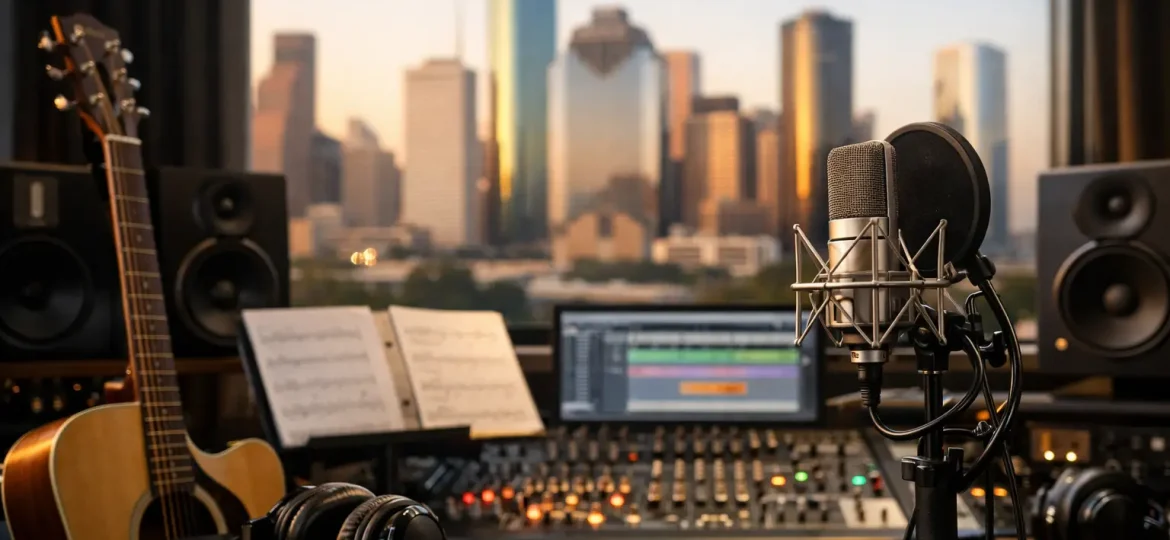
A great song can fall flat when the demo does not communicate its feeling, hook, or potential. The right song demo studio Houston artists choose should do more than put a microphone in front of you. It should give your idea enough clarity and energy that a collaborator, producer, venue, or listener understands why the song matters.
A demo is not always meant to be a final commercial release. It is meant to make a strong case for the song. Sometimes that means a raw vocal and acoustic guitar recording. Other times, it means building a full arrangement with drums, bass, keys, guitars, background vocals, and a polished mix. The best approach depends on where you want the song to go next.
What a Strong Song Demo Needs to Do
A useful demo answers a simple question: Can someone hear the finished vision in this recording? If the answer is yes, the production has done its job.
That does not mean every demo needs expensive layers or a huge pop arrangement. A singer-songwriter pitch may need intimacy more than volume. A country song may need a convincing vocal performance and a clean guitar foundation. A pop or R&B song may need a beat, vocal production, and enough detail to establish its identity. The arrangement should support the writing, not distract from it.
The vocal is usually the center of the demo. Clean audio helps, but clarity also comes from preparation, phrasing, emotion, and confidence. A strong studio session gives you room to try a line again, adjust a melody, stack harmonies, or change the delivery of a chorus until it feels right. Those small choices can turn a decent recording into a song people remember.
A good demo should also be easy to share. The listener should not have to imagine past bad audio, inconsistent timing, or an unfinished structure to find the song’s potential. Make the listening experience direct and convincing.
Choosing a Song Demo Studio in Houston
Every studio has equipment. What separates one song demo studio Houston musicians return to is the level of creative support behind the equipment. If you already know exactly what you want, you may mainly need a professional room, an engineer, and a clean recording process. If you have a lyric, melody, voice memo, or rough guitar part, you may need help shaping the song before the record button is pressed.
Ask whether the producer or studio owner is willing to listen critically to the material. Can they help identify a stronger key for your voice? Can they suggest where a pre-chorus needs lift, where a verse is too long, or where a harmony could make the hook hit harder? This is not about taking control away from the artist. It is about having an experienced second set of ears in the room.
You should also be clear about the scope of the project. A basic demo can be recorded efficiently when the song is fully written and rehearsed. Production support takes more time because it includes decisions about tempo, instrumentation, sound selection, arrangement, editing, and mix direction. Neither option is better by default. The right one is the one that serves your goal and budget.
At True Songs Productions, owner William Lemuel brings a songwriter’s perspective to the process. That can be especially valuable for artists who want more than a transactional session. You are not required to arrive with every answer. A productive studio partnership can help turn the version in your head into a recording that makes sense to everyone else.
Bring the Right Starting Point
You do not need to show up with a perfect pre-production package, but preparation protects your studio time. Have the lyrics in a readable format, know the song’s general structure, and bring reference tracks if you have them. A reference track is not a blueprint to copy. It simply helps communicate the mood, vocal style, energy, or instrumentation you like.
If you have recorded a voice memo, bring it. If you have chord charts, bring them. If you perform with a guitarist, keyboard player, or bandmate, decide in advance whether they will record with you. The studio can help solve creative problems, but it is much easier to make good decisions when the core idea is already on the table.
Rehearse before your session, especially the vocal. Know where you want to breathe, which words need emphasis, and how the chorus should build. You do not need to sound mechanical. You need enough familiarity with the song that you can focus on feeling rather than remembering the next line.
Build the Demo Around the Song, Not the Trend
It is tempting to chase whatever production style is currently popular. That can work when the sound genuinely fits the artist and the song. It can also date a demo quickly or hide a strong lyric under too many effects.
Start with the emotional center of the song. Is it vulnerable, aggressive, playful, reflective, romantic, or built for a live crowd? From there, make arrangement choices that reinforce that feeling. A stripped-back recording can make a personal lyric feel closer. A rising drum pattern can make a chorus feel larger. Background vocals can make a hook more memorable, but only if they leave space for the lead vocal to lead.
This is where collaboration matters. An artist may hear a full production in their head but need help translating it into trackable parts. Another artist may arrive with only a melody and need someone to suggest a musical direction. Both are valid starting points. The goal is not to make every artist sound the same. The goal is to make the song sound like it belongs to you.
Know When a Demo Is Finished
A demo is finished when it accomplishes its intended purpose, not when every possible sound has been added. For a co-writing session, a clear vocal and guitar may be enough. For pitching a song to another performer, you may need a fuller production that makes the melody and lyric easy to hear. For releasing independently, you may decide the demo has become the final master and needs more detailed mixing and mastering.
Be honest about the destination before you book. If you need a release-ready track, say so early. If you need a professional work tape to pitch the writing, say that too. This lets the studio recommend the appropriate recording plan instead of building beyond what the song requires.
A smart producer will also know when to leave something alone. Not every measure needs a fill. Not every vocal needs heavy tuning. Not every chorus needs to be louder than the last one. The best recordings have intention, and intention often means choosing restraint.
Use Your Demo Beyond the Studio
Once your recording is complete, it can support more than one opportunity. Send it to potential collaborators, use it to prepare for a live performance, share it privately with industry contacts, or use it as the foundation for a future release. If the song is headed toward public release, a video can help people connect with the artist behind the music.
That is where working with a studio that also understands video production can be useful. A performance video, lyric-focused visual, or music video should reflect the same identity established in the recording. Audio and visual work do not have to be created at the same time, but having one creative partner who can handle both can keep the direction focused.
Your first demo does not need to prove everything about you as an artist. It needs to prove one thing clearly: this song deserves another listen. Come prepared, stay open to strong creative input, and give the recording enough care to let the writing speak for itself.
