

A strong song can get people to listen. A strong video can get them to stop scrolling, pay attention, and remember your name. That is why artists keep asking, what is music video production, and what does it actually involve beyond just showing up with a camera.
Music video production is the full process of planning, filming, and editing a visual piece built around a song. It covers the creative side – concept, performance, style, story, pacing – and the technical side – lighting, camera work, audio playback, directing, editing, and final delivery. When it is done well, the video does more than look good. It supports the song, strengthens the artist’s image, and gives fans something worth sharing.
What is music video production in practical terms?
In practical terms, music video production is turning a track into a finished visual product that fits the artist and the release plan. Sometimes that means a cinematic storyline with actors and multiple locations. Sometimes it means a performance-driven shoot in a studio with strong lighting and clean edits. Sometimes it is a hybrid of both.
The biggest misconception is that music video production starts on shoot day. It does not. The camera day is only one phase. Most of the real quality comes from decisions made before filming starts and from the editing work that happens after.
If the song is polished but the visual concept is weak, the final video can still feel forgettable. If the concept is solid but the execution is rushed, the artist may end up with footage that never quite lands. That is why the process matters as much as the gear.
The three main phases of music video production
Music video production usually moves through pre-production, production, and post-production. Those terms can sound formal, but they are simply the planning stage, the shoot itself, and the edit.
Pre-production sets the direction
This is where the creative and logistical decisions get made. The team figures out what kind of video fits the song, the budget, and the audience. That may include choosing locations, building a shot list, scheduling talent, selecting wardrobe, and deciding whether the video leans more into performance, narrative, or mood.
This stage matters because it keeps the project from becoming random. A good pre-production process answers basic but important questions. What is the visual identity of the artist? What feeling should the video leave with the viewer? Does the song need a literal story, or is it better served by a clean performance setup with strong visuals? There is no one right answer. It depends on the track, the brand, and where the artist is in their career.
Production captures the footage
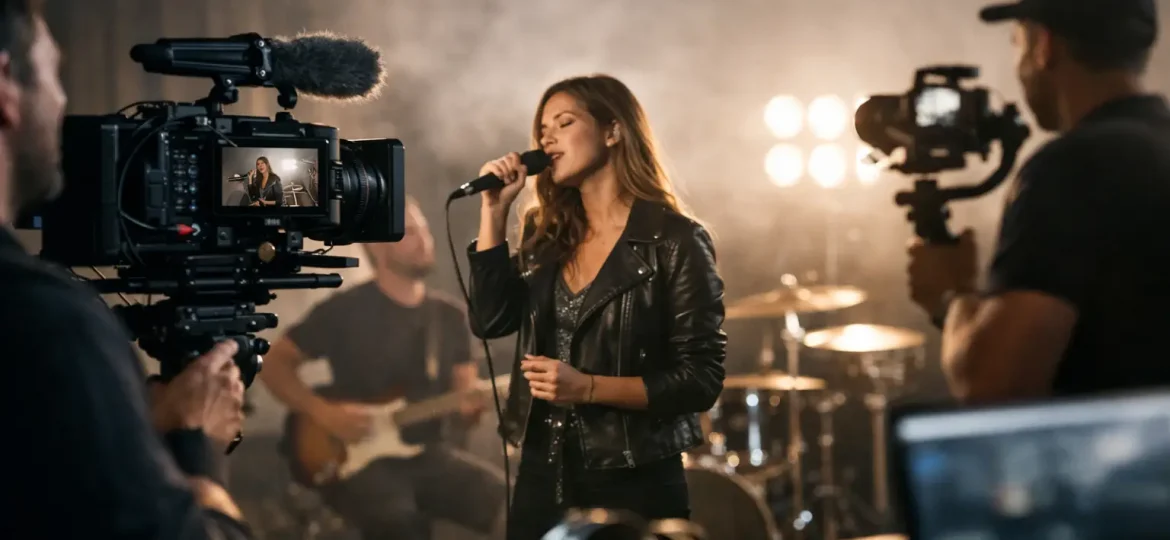
Production is the shoot day or shoot days. This is where the artist performs to playback while the crew captures the planned scenes. Depending on the concept, this may involve multiple camera setups, lighting changes, location moves, props, actors, dancers, or band members.
A lot of people assume the hardest part is pressing record. Usually it is not. The real work is making sure the performance feels natural on camera, the framing matches the concept, and the footage gives the editor enough to build a compelling final cut. Good direction is a big part of that. Artists often need help with pacing, movement, expression, and confidence on camera, especially if it is their first video.
Post-production shapes the final result
Post-production is where the raw footage becomes the music video people actually see. This includes selecting the best takes, syncing performance shots, building the sequence, adjusting color, cleaning up visuals, and exporting the final versions for release.
Editing can completely change how a video feels. Fast cuts can make a track feel more aggressive or energetic. Longer shots can make it feel more intimate or cinematic. Color grading can push a video toward warm, nostalgic tones or a colder, sharper look. This is also where mistakes from production either get solved or become impossible to hide.
What goes into a good music video?
A good music video is not just expensive. It is intentional. It knows what job it needs to do.
For some artists, that job is building a recognizable image. For others, it is giving a new single more reach on social platforms. For others, it is showing promoters, fans, and industry contacts that the artist is serious and ready for bigger opportunities. The best videos line up with those goals instead of trying to do everything at once.
Performance matters a lot. Even with strong lighting and clean edits, the artist still has to connect on camera. Viewers can tell when someone looks uncomfortable, underprepared, or disconnected from the track. That does not mean every artist has to act like a trained performer. It means the production should create an environment where the artist can deliver something believable and aligned with the music.
Visual consistency matters too. Wardrobe, locations, lighting, and editing style should feel like they belong to the same world. If one part feels gritty and stripped down while another feels glossy and commercial, that contrast has to be intentional. If it is accidental, the video can feel confused.
Different types of music video production
Not every project needs the same approach. A performance video is often the most direct option. It puts the artist front and center and works well when the goal is presence, energy, and clean branding. This can be especially effective for newer artists who need quality visuals without overcomplicating the concept.
A narrative video builds around a story. That can be powerful, but it also requires more planning and usually more resources. If the story is weak or disconnected from the song, it can distract instead of help.
A concept-driven video sits somewhere in the middle. It may not tell a literal story, but it uses a strong visual idea to create mood and identity. This can work really well for artists who want something memorable without producing a full short film.
There is also a simple truth here: bigger is not always better. A focused one-location shoot with great lighting and a clear performance can outperform a scattered video with too many ideas and not enough execution.
Why artists should care about the production process
The song may be your foundation, but the video often becomes the first thing people judge. It affects how professional you look, how seriously people take your release, and whether your content feels worth watching all the way through.
That is especially true for independent artists. You may not have a label budget, which means every piece of content has to work harder. A well-produced video can stretch the value of a single song by giving you material for full releases, social clips, promo edits, and visual branding.
It can also save time and money when audio and video are developed with some coordination. If the track, the artist’s image, and the visual concept are all working together early, the final product usually feels stronger. That kind of alignment is one reason artists like working with creator-led teams that understand both the music and the camera side. At True Songs Productions, that hands-on approach matters because the goal is not just to film something. It is to help artists come away with a finished product that looks right, feels right, and supports the release.
What affects the cost and scope?
Budget is part of every music video conversation, and the right budget depends on the result you need. Costs can rise based on locations, crew size, gear, actors, wardrobe, set design, and editing complexity. A one-day performance shoot in a controlled setting is very different from a multi-location concept video with a cast.
That does not mean artists on smaller budgets should wait forever. It means they should be strategic. Sometimes the smartest move is a simple, polished video that fits the song and gets released on time. A cheaper video with a clear concept is usually more effective than an overreaching project that stalls out in production or looks unfinished.
The real question is not just what can you spend. It is what kind of video will actually help this song move.
How to know if your project is ready
If you have a finished or nearly finished song, a basic vision, and a real plan to release the track, you are probably closer than you think. You do not need every detail figured out before talking to a production team. In many cases, part of the value is getting help shaping the idea into something practical and strong.
What helps most is clarity on the essentials. Know your song. Know your audience. Know whether you want the video to introduce you, elevate your image, or push a specific release. From there, the production process can do its job.
A music video should not feel like an extra task added after the music is done. It should feel like an extension of the record – one more chance to show people who you are, what you sound like, and why they should keep watching. Start with the right song, bring a real concept, and give the process room to work.
