

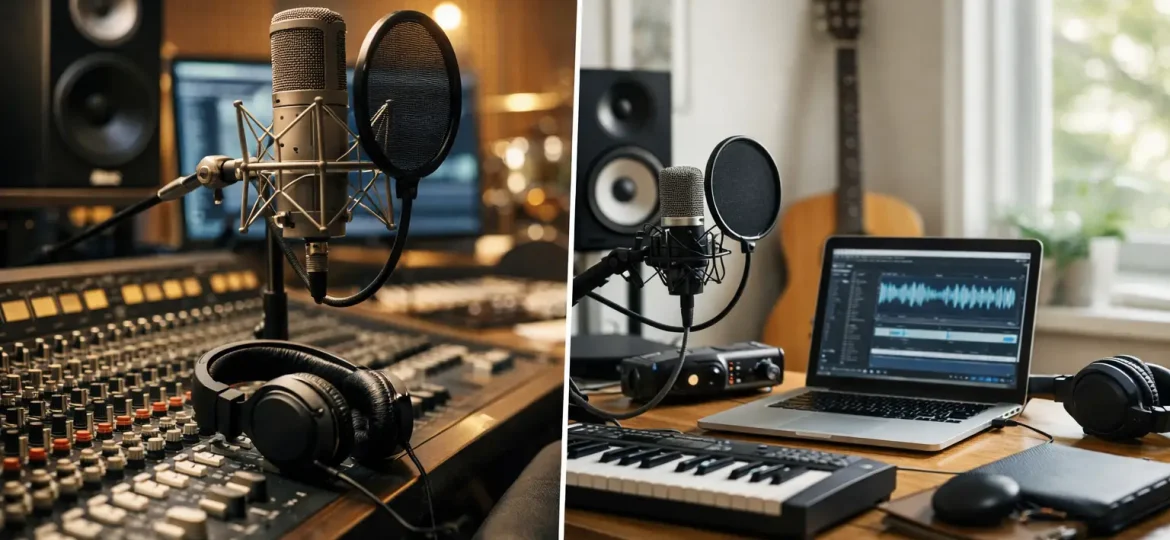
You can write a great song in a bedroom. You can even record one there. But when it is time to turn that idea into something people want to replay, share, and take seriously, the question gets real fast: studio recording vs home recording. The right choice depends on what you are making, how polished it needs to sound, and how much help you want during the process.
For some artists, home recording is the perfect place to capture ideas and build confidence. For others, a professional studio is what turns a rough track into a release-ready record. Most musicians are not choosing between good and bad. They are choosing between convenience and control, budget and efficiency, independence and collaboration.
Studio recording vs home recording: what changes the result?
The biggest difference is not just the room or the gear. It is what those things do to your performance, your workflow, and the final sound.
In a home setup, you usually work with what you have. That might mean a USB mic, headphones, basic acoustic treatment, and recording software you are still learning. You can absolutely make good music that way, especially for demos, songwriting sessions, beat creation, and certain styles that do not demand a highly polished sound. Home recording gives you freedom. You can experiment at midnight, re-record a vocal ten times, and take your time without watching the clock.
A studio changes the environment from the start. The room is designed for tracking and monitoring. The signal chain is cleaner. The microphones fit the voice or instrument better. The engineer or producer can hear problems before they become permanent. That means less guessing, fewer technical distractions, and a better chance of capturing a performance that feels finished instead of almost finished.
That difference matters more than people think. A strong song recorded poorly can sound smaller than it should. A good studio setup does not magically create talent, but it does reveal it more clearly.
When home recording makes sense
Home recording works best when flexibility matters more than perfection. If you are writing often, testing ideas, cutting scratch vocals, or building arrangements piece by piece, recording at home can keep your momentum going.
It also makes sense if you are still learning your sound. A lot of independent artists need room to experiment before paying for studio time. At home, you can try new lyrics, stacks, harmonies, and production choices without pressure. That freedom can lead to real creative breakthroughs.
There is also a practical side. If your budget is tight, a home setup lets you start now instead of waiting. That matters. Songs do not help your career sitting in your notes app.
Still, the trade-off is consistency. Most home setups run into the same issues: room noise, bad mic placement, uneven levels, poor vocal isolation, and monitoring that hides problems until the song is played somewhere else. You may save money upfront, but lose time fixing takes, editing around distractions, or re-recording parts that never sounded right in the first place.
For content that moves fast, home recording can be enough. For music you plan to release, pitch, or use to represent your brand as an artist, enough is not always the goal.
When studio recording is worth it
Studio recording becomes the better investment when the track needs to compete. That could mean a single, an EP, vocal sessions for a serious release, live instruments, or any project where clarity and impact matter.
A professional studio helps in obvious ways, like better acoustics and gear. But the less obvious benefit is direction. If you are trying to get the best vocal take, shape an arrangement, tighten a performance, or avoid technical mistakes, having an experienced producer or engineer in the room can change the outcome quickly.
That is especially true for artists who do not want to spend half their session troubleshooting software or second-guessing settings. In a studio, you can stay focused on the music. That usually leads to stronger performances because your energy stays in the right place.
Studio time can also be more efficient than artists expect. People often assume recording at home saves time because it is always available. Sometimes it does. But just as often, home sessions stretch out for weeks because nothing forces decisions. A studio session creates momentum. You show up prepared, work with intention, and leave with progress you can hear.
Studio recording vs home recording for vocals
Vocals are where the gap becomes obvious.
At home, vocals are the hardest thing to get right consistently. Your room affects the tone. Outside noise can ruin a strong take. Cheap mics can exaggerate harshness or miss detail. If your headphones or monitors are inaccurate, you may over-sing, under-sing, or process the vocal in ways that hurt the mix.
In a professional studio, the setup is built to flatter the performance. The room helps the mic do its job. The engineer can adjust gain, positioning, and tone in real time. You are not just recording louder or cleaner. You are capturing emotion with fewer technical problems getting in the way.
That matters if your voice is the center of the song. Listeners may forgive a lot, but they notice vocals right away. If the vocal sounds thin, muddy, harsh, or buried, the whole track feels less professional.
The budget question is not as simple as it looks
Home recording usually looks cheaper because you are not paying hourly. But that does not make it automatically more affordable.
You still pay for equipment, software, plugins, headphones, interfaces, treatment, and all the upgrades that seem necessary after the first few sessions. Then there is the cost of your time. If it takes you ten hours to do what a studio can help you accomplish in three, the math changes.
Studio recording costs more upfront, but the value is often in speed and quality. You are paying for an environment, equipment, expertise, and a smoother process. If the end goal is a polished release, that can be the more cost-effective path.
The smartest approach for many artists is not either-or. It is using both on purpose. Write and demo at home. Then bring the strongest songs into a studio for final vocals, production, mixing, or even video content if you want your release to look as strong as it sounds.
What kind of artist benefits most from each option?
If you are a songwriter who wants to capture ideas quickly, home recording is a useful tool. If you are a producer who knows your software well and works mostly in the box, home may be enough for large parts of your process. If you create content constantly and need volume, convenience matters.
If you are a vocalist, a first-time artist, or someone preparing music for streaming platforms, performances, auditions, or promotion, studio support usually makes a bigger difference. The same is true if you want outside input on delivery, arrangement, or production choices.
A lot of artists do not need more gear. They need better guidance, better acoustics, and a setup that helps them finish strong.
That is where a collaborative studio has real value. At True Songs Productions, that hands-on approach matters because many artists are not just booking time. They are trying to turn an idea into a song people remember.
How to choose without overthinking it
Ask a simple question: what is this recording supposed to do?
If it is for writing, practicing, testing ideas, or posting quick content, home recording may be the right move. If it is supposed to represent you professionally, attract listeners, or support a release plan, studio recording deserves serious consideration.
Also be honest about your current setup and skill level. If you know how to get clean takes and solid mixes at home, great. If you are constantly fighting noise, uneven vocals, or muddy playback, the problem may not be your talent. It may be your environment.
The best recordings happen when the setup matches the goal. Some songs need privacy and experimentation. Others need focus, experience, and a room built to capture what you actually sound like.
A good record does not come from choosing the cheaper option or the more impressive option. It comes from choosing the one that gives your song the best chance to connect. If you want people to hear the difference, make sure your process gives them something worth hearing.
