

The fastest way to get stuck in music production is to think you need a perfect setup before you start. You do not. A good guide to music production for beginners starts with one truth: great songs usually come from clear decisions, not expensive gear.
If you are new to recording, producing, and shaping your own sound, the goal is not to do everything at once. The goal is to get your ideas out, learn what each part of the process does, and improve one skill at a time. That approach saves money, saves time, and helps you finish songs instead of collecting half-built sessions on your hard drive.
What music production actually includes
A lot of beginners hear the word production and think it only means adding effects or making beats. In practice, production is bigger than that. It includes how the song is arranged, how it is recorded, what sounds are chosen, how the performance is captured, and how everything is shaped into a final record.
That means a producer is often making creative and technical decisions at the same time. Should the chorus be bigger? Does the vocal need more emotion or just a better mic position? Is the drum sound wrong, or is the pattern wrong? These are production questions.
For beginners, this matters because you do not need to master every specialty on day one. You just need to understand the chain. Songwriting leads into arrangement. Arrangement leads into recording. Recording leads into editing and mixing. Mixing prepares the track for mastering. When you know where you are in that chain, your sessions start making more sense.
A beginner setup that actually works
The most practical guide to music production for beginners is not a shopping spree. It is a basic system you can learn quickly.
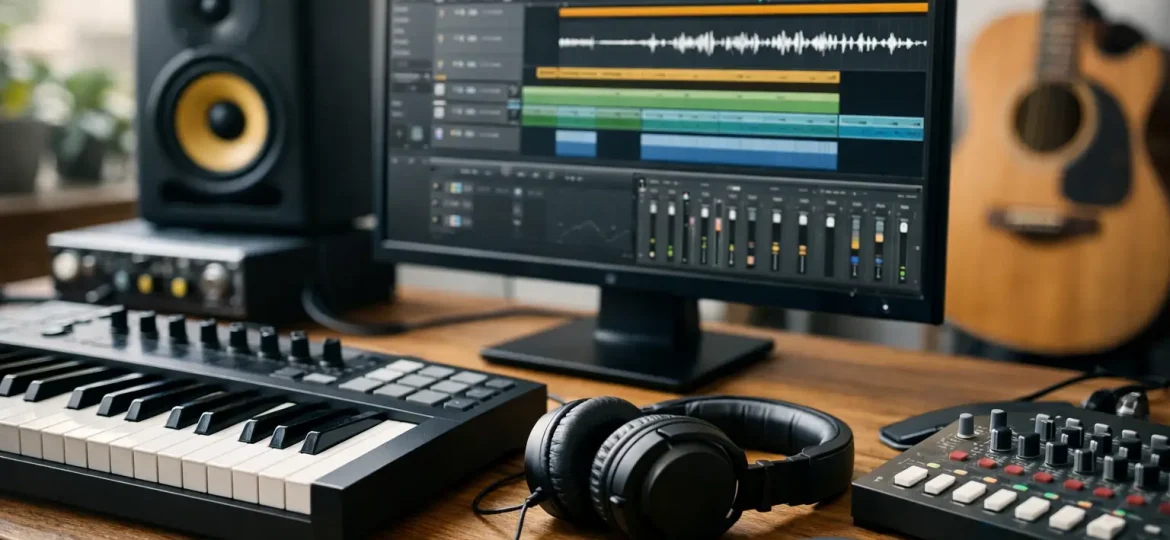
Start with a computer that can handle recording software without freezing every few minutes. Then choose a DAW, which is your digital audio workstation. Logic Pro, Pro Tools, Ableton Live, FL Studio, Studio One, and Reaper can all get the job done. The best choice depends on how you work. If you are a singer-songwriter recording vocals and instruments, one DAW may feel more natural. If you are beat-focused, another might move faster for you. There is no universal winner.
You also need an audio interface, a decent microphone, headphones, and ideally a pair of studio monitors once your budget allows. A MIDI keyboard can help if you plan to build parts with software instruments, but it is not required for everyone.
Room sound matters more than many beginners expect. A great mic in a bad room can still give you a weak recording. If your space is untreated, use what you have wisely. Record in the quietest part of the room, reduce reflections with soft materials if needed, and pay attention to background noise. That will usually help more than buying a second plug-in bundle.
Learn your DAW before you buy more gear
A lot of new producers try to solve every problem with gear. More often, the problem is familiarity.
Before you upgrade anything, learn how to record a track, set levels, use a click, create playlists or takes, comp vocals, edit timing, add EQ, use compression, and set up reverb and delay sends in your DAW. If those basics still feel slow, more equipment will not fix that.
This is where patience pays off. The first few sessions may feel mechanical. That is normal. Repetition builds speed, and speed gives you room to be creative.
Start with arrangement, not effects
Beginners often reach for plug-ins too early. They hear a flat song and try to mix it into excitement. Usually, the better move is to fix the arrangement.
If the verse and chorus feel the same, no amount of reverb will create momentum. If the vocal is fighting three lead instruments, the issue is not the limiter. It is the part selection. Strong production starts by giving each section a role and each instrument some space.
One useful habit is to ask what the listener should notice first. In some songs, it is the vocal. In others, it might be the groove or a guitar hook. Once you know the focal point, the rest of the arrangement can support it instead of competing with it.
Recording clean is easier than fixing later
A strong performance recorded well will beat a mediocre performance recorded through fancy gear almost every time. That is why mic placement, gain staging, and coaching the performance matter so much.
Keep your input levels healthy without recording too hot. Digital recording gives you enough headroom, so there is no prize for getting close to clipping. If you are recording vocals, pay attention to distance from the mic, plosives, room reflections, and whether the singer sounds comfortable. If the artist cannot hear the track properly in their headphones, the performance may suffer before you ever hit record.
Do multiple takes. Not because the artist is bad, but because choice is valuable. Sometimes the magic is in the first pass. Sometimes the best chorus comes on take five. A producer’s job is partly knowing when to keep going and when to stop.
Mixing is about clarity and emotion
New producers sometimes treat mixing like a technical exam. It is more useful to think of it as shaping how the song feels.
EQ helps sounds fit together. Compression controls dynamics and can add consistency or energy. Reverb and delay create depth and space. Panning helps separate elements so the mix does not feel crowded. Volume automation brings important moments forward.
The trade-off is that every tool can help or hurt. Too much EQ can make a track thin. Too much compression can flatten the life out of a vocal. Too much reverb can push the song away from the listener. That is why subtle moves usually outperform dramatic ones.
Reference tracks can help here. Compare your mix to a professionally released song in a similar style. Do not copy it blindly, but use it to check balance, low end, vocal level, and overall energy. If your mix sounds muddy next to the reference, that gives you something concrete to fix.
Know when to use loops, samples, and software instruments
There is nothing wrong with building tracks from loops or virtual instruments. Plenty of strong records start there. What matters is whether the final result sounds intentional.
If you rely on stock loops without changing anything, your song may sound generic fast. But if you chop, layer, tune, automate, and combine sounds with purpose, those same tools can become part of your signature. Beginners should not feel embarrassed about using available resources. The better question is whether you are making creative choices or just dragging files into a timeline.
Collaboration can speed up your growth
One of the biggest myths in beginner production is that doing everything yourself makes you more serious. Sometimes it just makes the learning curve slower.
Working with an engineer, producer, or songwriter can help you hear what you are missing. Maybe your vocal is solid but your arrangements need more movement. Maybe your songs are good, but the recordings are not translating. Outside input can shorten that gap. A hands-on studio can be especially useful when you want more than room rental and need someone who can help shape the record.
If you are local to Houston and want that kind of support, working with a team like True Songs Productions can help you move from rough demos to polished songs without guessing your way through every step alone.
The mistakes that cost beginners the most time
Most beginner mistakes are not dramatic. They are small habits repeated over and over.
Recording with poor monitoring leads to bad decisions. Overproducing weak songs wastes energy. Using too many plug-ins can hide the real issue. Ignoring arrangement makes mixing harder than it needs to be. And constantly starting new tracks without finishing any of them keeps you from learning the full process.
A finished simple song will teach you more than ten unfinished ambitious ones. Finishing shows you where your actual weaknesses are.
Build a process you can repeat
The producers who improve fastest are usually not the ones with the most gear. They are the ones with a repeatable workflow.
That can be as simple as this: write the song, build a rough arrangement, record a clean guide vocal, track the main instruments, re-record keepers, edit what matters, mix with restraint, and get feedback before calling it done. Your process may change over time, but having one keeps you from drifting.
Music production is part art, part judgment, and part problem-solving. The beginner stage is not about proving you know everything. It is about learning how to hear better, choose better, and finish stronger. Start simple, stay consistent, and let each song teach you what the next one needs.
