

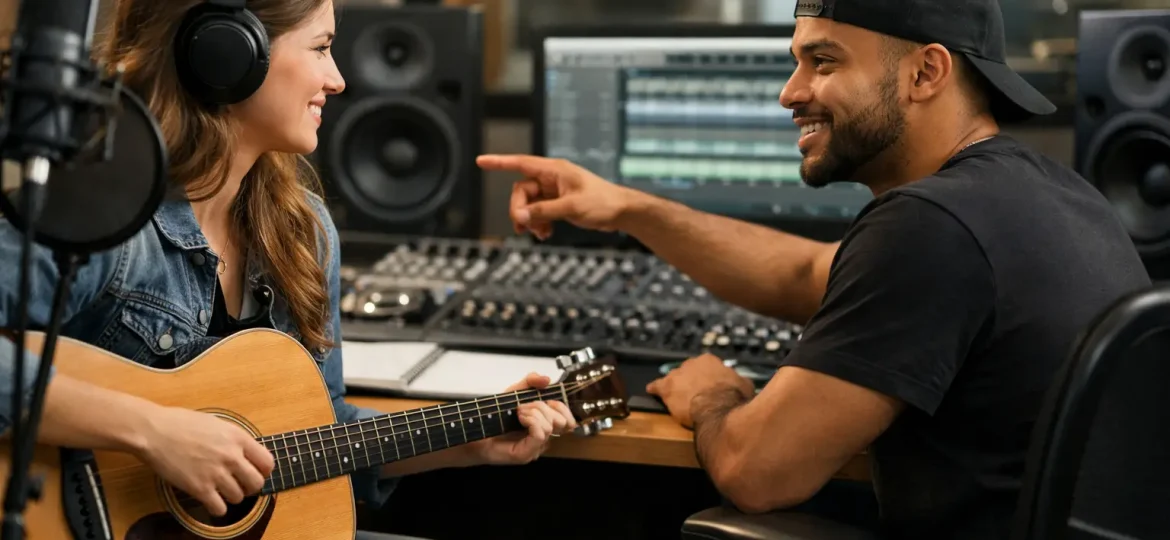
A producer can hear the difference between an idea that is interesting and a song that is ready to hold a listener’s attention. That is why learning how to write songs with a producer is not just about booking studio time. It is about bringing someone into your creative process who can help turn a voice memo, a lyric, a chord progression, or a beat into a complete record.
For some artists, that collaboration starts with a nearly finished song. For others, it starts with one line in a notebook and a sound they cannot get out of their head. Both are valid starting points. The key is showing up ready to communicate, make decisions, and leave room for the song to become better than the version you first imagined.
Start With a Clear Creative Direction
You do not need to have every lyric, melody, and arrangement complete before meeting with a producer. You should, however, know what you want the song to make people feel. Is it a late-night R&B record with space around the vocal? A high-energy rap track? A country-pop song built around a personal story? A worship song that needs to build naturally from verse to chorus?
Give your producer a few useful reference points. Share two or three songs that capture the mood, vocal energy, pacing, or production style you have in mind. Explain what you like about each one. Saying, “I want it to sound like this artist,” is less helpful than saying, “I like the dry vocal at the beginning, the live drums in the chorus, and how the hook repeats without getting boring.”
References are a direction, not a blueprint. A good producer will use them to understand your taste while helping you create something that sounds like you.
Bring the Raw Material, Even If It Is Messy
Many writers wait too long because they think they need to bring a perfect demo into the studio. That can slow down a song that has real potential. A rough phone recording, a list of lyric ideas, a chorus melody, or a simple guitar progression is enough to begin a productive writing session.
Before the session, gather everything connected to the idea in one place. That includes lyric drafts, voice notes, beat sketches, chord charts, previous demos, and reference songs. If you have several versions of a chorus, bring them all. Sometimes the best line is sitting in an older note you had forgotten about.
Be honest about what is unfinished. Tell the producer whether you are stuck on the second verse, unsure about the hook, or struggling to find the right key for your voice. Clear problems are easier to solve than vague frustration.
Know What You Want Help With
A producer can contribute at different levels. You may need help finding chords that support your melody, creating a beat, tightening lyrics, arranging background vocals, or deciding where the song needs to lift and where it needs to breathe. Tell them which role you want them to play.
It also helps to discuss songwriting credit early. If a producer changes melody, writes lyrics, develops chords, or creates a central musical idea, that may be a songwriting contribution. If they are primarily recording and arranging your finished song, the credit conversation may look different. There is no single answer for every session, but clarity protects the relationship and the record.
How to Write Songs With a Producer in the Room
The best writing sessions have momentum. That does not mean every idea is immediately right. It means everyone can test an idea quickly, listen honestly, and move forward without getting attached to the first version.
Start by playing or singing the strongest part of the song. Usually that is the hook, title, main riff, or central lyric. Your producer can then help identify the song’s foundation: tempo, key, groove, structure, and overall emotional tone. Once those choices are in place, writing becomes more focused.
If you are writing lyrics together, work from the core message. What is the listener supposed to understand or feel by the final chorus? A strong lyric is not always complicated. It needs to be specific enough to feel true and simple enough to remember. Details like a street name, a missed call, a Sunday dress, or an empty passenger seat can make a familiar feeling sound personal.
When the melody is not landing, do not keep forcing the same phrase. Change the rhythm. Try a different note at the end of the line. Sing it an octave lower. Remove a word. Often, the melody improves when the lyric gets more direct.
Let the Arrangement Serve the Song
A producer’s value is often most obvious in the arrangement. A song can have a strong chorus but still feel flat if every instrument enters at once and stays there. Arrangement creates movement. It tells the listener when to lean in and when to feel the release.
That may mean keeping the first verse sparse so the vocal feels close and honest. It may mean adding bass and drums only after the pre-chorus, or stacking harmonies on the final hook to make the ending feel bigger. It can also mean removing a part that sounds good by itself but distracts from the vocal.
Be willing to make cuts. A great guitar part, synth line, or lyric does not automatically belong in the final version. If it competes with the hook, it may need to change or go. The goal is not to prove how many ideas fit into one record. The goal is to make the strongest idea impossible to miss.
Record a Working Vocal Early
Do not wait until every production detail is finished to record vocals. A working vocal gives everyone something real to react to. It reveals whether the key is comfortable, whether the verses have enough energy, and whether the chorus actually feels like a payoff.
Treat that first take as a guide, not a final performance. You may discover that a lyric needs fewer syllables or that a melody feels better when it is more conversational. Those discoveries are part of the writing process, not mistakes.
Communicate Without Losing Your Voice
Collaboration works best when you can express your opinion without treating feedback as a personal attack. If a producer suggests changing a lyric you love, ask why. They may be hearing a pacing issue, an unclear image, or a melody that does not sit naturally in your range. You do not have to accept every suggestion, but you should understand the reason behind it.
At the same time, do not hand over your identity just because someone has more technical experience. You are the artist. If a line carries your story or a melody feels essential to your sound, say so. The strongest producer relationships combine honest feedback with respect for the artist’s point of view.
Use practical language when something is not working. Instead of saying, “I don’t like it,” try, “The chorus feels too busy,” “I need the vocal to feel more intimate,” or “The beat is energetic, but it does not match the lyric.” Specific feedback saves time and keeps the room creative.
Make Decisions Before the Session Ends
A writing session should end with more than a promising idea. Before you leave, identify what has been completed, what still needs work, and who is handling the next step. Confirm the song title, lyric version, key, tempo, and rough arrangement. Save the session files and keep a copy of the latest demo.
If the song needs a rewrite, schedule it while the idea is fresh. If it is ready for production, decide what needs to be recorded next: lead vocals, instruments, background vocals, or final edits. This is how a good session becomes a finished release instead of another unfinished folder on your phone.
At True Songs Productions, the goal is to give artists more than a place to record. You get hands-on creative support to shape the song, strengthen the production, and make your ideas a reality.
The right producer will not write your story for you. They will help you hear its strongest version, then build a record that gives listeners a reason to press play again.
