

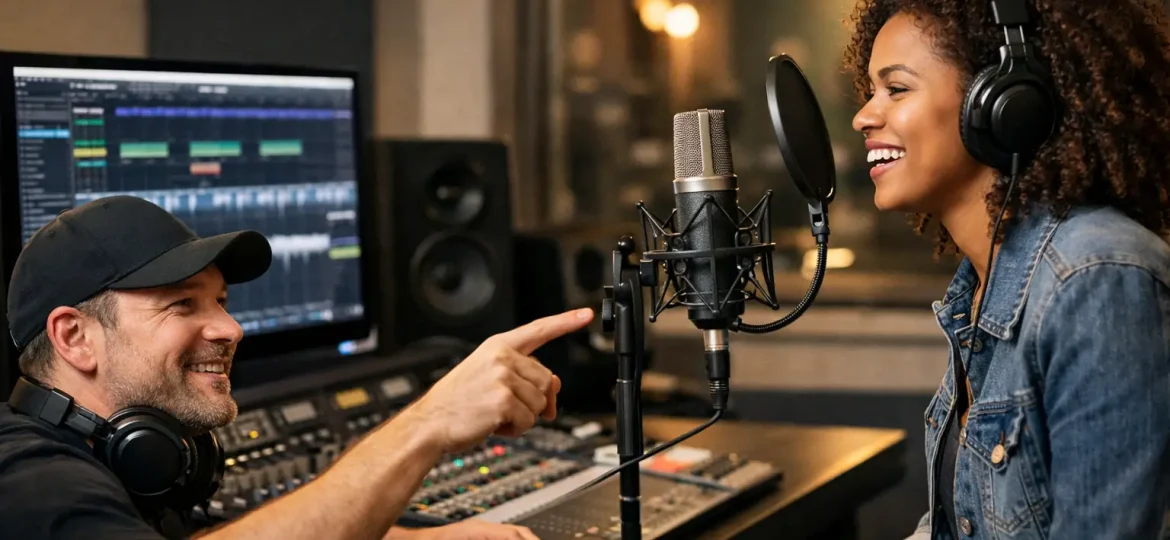
A song can be 90 percent written and still feel impossible to finish. You may have a strong chorus, a voice memo full of verses, and a beat that fits the mood, but no clear answer for what comes next. Can producers help finish songs? Absolutely. The right producer helps turn scattered pieces into a record with direction, momentum, and a sound you are proud to release.
Finishing a song is not just about adding more instruments or making the mix louder. It is about making good decisions at the right time. A producer can help you decide what the song needs, what it does not need, and when it is finally done.
What a Producer Brings to an Unfinished Song
A producer is part creative partner, part problem-solver, and part outside set of ears. That matters because artists often get too close to their own material. After hearing the same demo for weeks, it becomes hard to tell whether the second verse drags, the chorus lands, or the arrangement is covering up the strongest idea.
A producer can step back and hear the song as a listener would. They can identify the moment that grabs attention, then build the arrangement around it. Sometimes that means strengthening a lyric, changing the chord movement, trimming an intro, or finding a melody that gives the chorus more lift. Other times, the best production choice is restraint: remove a busy guitar part, simplify the drums, or leave space around an emotional vocal.
The goal is not to turn every song into the producer’s song. It is to bring the artist’s original idea into clearer focus.
Can Producers Help Finish Songs When the Writing Is Stuck?
Yes, especially when the issue is not a lack of talent but a lack of perspective. Many unfinished songs stall in familiar places: a verse has no ending, the bridge feels forced, the hook is good but repetitive, or the track has energy without a complete message.
A collaborative producer can help by asking practical questions. What is the song really about? What should the listener remember after one listen? Does the chorus say the title or emotional payoff clearly enough? Is there a better place to start the story?
Those questions lead to real choices. A producer may suggest moving a pre-chorus line into the chorus, writing a shorter second verse, or replacing a generic lyric with a detail that makes the story believable. If you are a singer-songwriter, they may play alongside you and help find a chord or melody that gets you past the roadblock. If you are building a hip-hop, R&B, pop, country, or rock record, they may reshape the beat and arrangement so the vocal has a stronger place to live.
That is different from someone simply handing you a finished instrumental. Both services have value, but creative production support is built around developing your song, not fitting your voice into a one-size-fits-all track.
A Producer Helps You Make the Hard Decisions
Most songs are not unfinished because the artist has zero ideas. They are unfinished because there are too many options.
Should the first chorus hit after eight bars or sixteen? Should the bridge change the mood or repeat the main hook? Is the vocal better intimate and close, or bigger with doubles and harmonies? Should the final chorus build, drop out, or end unexpectedly?
These choices shape whether a listener stays engaged. A producer helps organize them into a process so you are not changing everything at once. You can start with the foundation: lyric, melody, tempo, key, and song structure. Then move into the arrangement, performance, recording, and final mix.
That order saves time. Trying to fix a weak chorus with more effects rarely works. Recording ten vocal layers before settling the key can create more work than necessary. A producer helps keep the project moving toward the finish line instead of circling around it.
Production Is More Than a Beat or a Mix
Artists sometimes use the word “producer” to mean the person who made the instrumental. Others use it to mean the engineer who records and mixes the song. In a hands-on studio setting, production can include both technical and creative guidance, but they are not exactly the same job.
A beatmaker may create the musical foundation. A recording engineer captures a clean vocal performance. A mix engineer balances the finished tracks. A producer guides the overall record from idea to final direction, often coordinating all of those moving parts.
One person can take on multiple roles, particularly in an independent studio. Still, it is smart to talk through what you need before booking time. If you already love your instrumental and have finished lyrics, you may mainly need vocal production, recording, and mixing. If all you have is a chorus in your phone, you may need songwriting support, arrangement ideas, musicianship, and a custom track built around your voice.
Clear expectations make collaboration easier and help you budget for the right service.
When You Should Bring in a Producer
You do not have to wait until a song is completely stuck. In fact, bringing in a producer early can prevent the usual demo-stage problems from taking over.
Consider getting production help if your song has one or more of these signs:
- You like the idea but cannot write past the first verse or chorus.
- Your demo feels flat, even though the lyrics and melody seem solid.
- You have several versions and cannot tell which one is strongest.
- The song works live but loses impact when you try to record it.
- You want a polished release but do not know how to arrange vocals, instruments, or dynamics.
- You are ready to record but need an experienced creative partner in the room.
Early involvement does not mean giving up control. It means getting input before small problems become expensive recording problems. A good producer should explain why they are suggesting a change and make room for your preferences. The final track should still sound like you.
How to Get Better Results From a Producer
Come prepared, but do not feel like everything has to be perfect. Bring the best version of what you have: a phone recording, rough lyric sheet, reference tracks, chord progression, beat idea, or even a description of the mood you want. The clearer the starting point, the faster a producer can help develop it.
It also helps to name your goal. Are you making a first single, building an EP, improving your songwriting, preparing for a performance, or creating content for a music video? A production plan changes when the track needs to stand alone on streaming platforms versus when it needs to support a larger visual release.
Be open to trying ideas before rejecting them. You do not have to keep every suggestion, but a quick test can reveal what the song has been missing. The best sessions leave room for experimentation while staying focused on the song’s identity.
At True Songs Productions, that kind of hands-on collaboration can bring songwriting, recording, production, and video planning under one roof. For an independent artist, that can mean less back-and-forth and a more consistent creative vision from the first demo through the final release.
The Trade-Off: Help Should Not Erase Your Voice
Not every producer is the right fit for every artist. Some specialize in a highly recognizable sound. That can be useful if it matches your direction, but it may not serve a song that needs something more personal or stripped back.
Before working together, listen for communication as much as technical skill. Do they ask about your influences and goals? Can they explain their process? Are they willing to protect the lyric or melody that matters most to you? Strong production is not about winning every creative argument. It is about making the record better.
There are also practical conversations to have before the work starts. Discuss session time, how many revisions are included, who owns the master recording, how songwriting or publishing splits will be handled if someone contributes creatively, and what files you will receive. These details protect the relationship and let everyone focus on the music.
A producer cannot manufacture a meaningful song out of nothing. But when the feeling is there and the path is unclear, the right collaboration can make the difference between another unfinished demo and a record people can actually hear. Bring in someone who respects the idea, challenges it when needed, and helps you make the final decisions with confidence.
