

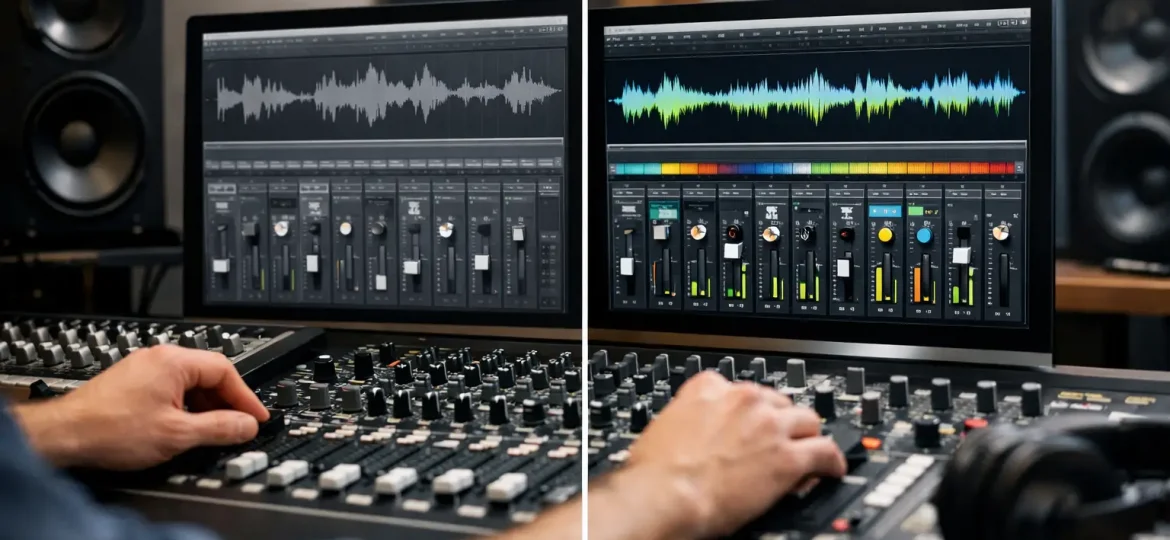
A before and after audio mixing example can be more revealing than a long explanation of plugins, gear, or studio terminology. Play the raw version of a song, then play the mix. The difference should feel immediate: the vocal is easier to follow, the beat has shape, the instruments stop fighting each other, and the song carries the emotion the artist intended.
That does not mean the mixed version should sound artificially perfect. Good mixing does not erase personality. It gives the performance a clear place to live.
What You Hear Before Mixing
Before mixing, a recording is often a collection of good parts that have not learned how to work together yet. The singer may have delivered a strong take. The guitarist may have found the right texture. The drums may hit hard on their own. But when every track plays at once, the song can feel crowded, dull, thin, harsh, or inconsistent.
A typical rough recording might have a lead vocal that gets buried whenever the chorus arrives. Low frequencies from the kick drum, bass, and keyboard can stack up into a muddy rumble. A bright cymbal or electric guitar may distract from the lyric. One word in a vocal line may jump out too loudly while the next disappears.
None of that automatically means the song was recorded badly. It means the recording is still in its working stage. Tracking captures performances. Mixing makes decisions about balance, tone, space, and movement so listeners can experience the song as one complete piece.
A simple example
Picture an acoustic pop song with lead vocal, acoustic guitar, bass, light drums, piano, and a few background vocals. In the before version, the guitar may sound full and warm by itself, but its low-mid range masks the vocal. The bass is present, yet its notes blur together with the kick. The background vocals are audible, but they sit directly on top of the lead instead of supporting it.
The raw version may still have feeling. In fact, that feeling is the reason to mix it carefully. The goal is not to replace the artist’s identity with a generic studio sound. The goal is to let the strongest parts come through without distractions.
What Changes in a Before and After Audio Mixing Example
The most noticeable change is usually balance. A mixer sets the relative level of each element so the listener knows where to focus at any moment. In a verse, that may mean keeping the lead vocal intimate and allowing the instruments to stay slightly behind it. In a chorus, the drums, bass, doubles, and harmonies can rise together to make the section feel larger.
Balance is more than turning tracks up and down once. Songs move. A vocal might need a small lift at the end of a phrase. A guitar fill may need to come forward for two beats, then step back. Automation handles those moment-to-moment choices. It is one reason a finished mix feels alive instead of flat.
Equalization, often called EQ, is another major part of the change. EQ helps remove unnecessary frequencies and make room for the sounds that matter. For example, rolling off low rumble from a vocal or acoustic guitar can clear space for the kick and bass. A small adjustment in the vocal’s presence range can help words cut through without making the singer sound sharp.
This is where restraint matters. More treble does not always equal more clarity, and more bass does not always equal more power. Overdoing EQ can leave a song brittle, hollow, or unnatural. The right move depends on the arrangement, recording quality, genre, and voice.
Compression controls dynamics, or the difference between softer and louder moments. On a vocal, it can help a performance stay present without forcing the listener to keep adjusting the volume. On drums, it can add punch or sustain. Used well, compression supports energy. Used too aggressively, it can make a mix feel squeezed and tiring.
Then there is space. Reverb and delay can place a dry recording in an environment, add depth, and create character. A close, nearly dry vocal may work beautifully for an intimate singer-songwriter track. A bigger reverb or tempo-based delay may help a modern pop, rock, or worship chorus open up. The best effect is not always the most obvious one. Sometimes the listener only notices that the song feels wider, deeper, and more finished.
The Vocal Is Usually the Test
For most artist-driven songs, the lead vocal is where listeners connect first. If the lyric is hard to understand or the vocal tone feels disconnected from the track, a technically polished instrumental will not carry the record.
In a strong after-mix example, the vocal sounds clear without sounding pasted on top. You can hear the words, the breaths feel natural, and the emotional changes in the performance remain intact. De-essing may soften harsh S sounds. Subtle tuning can correct distractions while preserving a real human performance. Compression and volume automation can keep phrases consistent.
There is a trade-off here. Some genres want a polished, controlled vocal. Others benefit from cracks, breath, grit, and unevenness because those details make the delivery believable. A good producer and mixer listens to the song before deciding how clean it should be.
Why the Low End Often Makes or Breaks the Mix
Many home recordings sound acceptable through headphones, then fall apart in a car or on larger speakers. Low end is usually the reason. The kick drum and bass must work together, but they cannot both dominate the same space at the same time.
In the before version, the bottom end may feel large but undefined. You hear weight, yet you cannot tell where the pulse is. In the after version, the kick has a recognizable impact and the bass has a clear note. The song feels solid without swallowing the vocal or making the speakers work too hard.
This is not just a matter of adding bass. It can involve EQ, compression, arrangement choices, and careful monitoring. Sometimes the best mixing decision is to reduce a low-frequency buildup in a keyboard, guitar, or vocal effect rather than changing the bass itself.
A Mix Should Translate Beyond the Studio
A finished song has to work in more than one listening environment. It should hold together on studio monitors, headphones, a phone speaker, a car system, and the speakers at a live event. Each playback system reveals something different.
Phone speakers expose whether the vocal and main hook are audible without deep bass. Cars reveal low-end problems and harsh high frequencies. Headphones can uncover edits, noise, and panning details. Reference listening across these environments helps prevent a mix that sounds impressive in one room but weak everywhere else.
That is also why a before and after comparison should be level-matched when possible. A louder version often seems better at first, even if it is not clearer or more musical. When both versions are played at similar volume, the real improvements stand out: focus, separation, impact, and emotional direction.
Mixing Cannot Fix Every Problem
Mixing is powerful, but it is not magic. A poorly chosen key, an out-of-time performance, room noise, a damaged microphone, or an arrangement with too many competing parts may need attention before the mix stage. Honest production means identifying those issues early instead of trying to hide them later.
That is why creative collaboration matters. A little guidance during recording can save hours of repair work. A second vocal take, a simplified guitar part, a tighter harmony, or a better microphone position may make a bigger difference than another plug-in ever could.
At True Songs Productions, the process is built around that practical, artist-first approach. The focus is not simply on renting time in a room. It is on helping your song make sense from the first idea through the final playback.
Your next recording does not need to sound like somebody else’s record. It needs to sound like your song at its best – clear enough to connect, strong enough to replay, and finished enough to share with confidence.
