

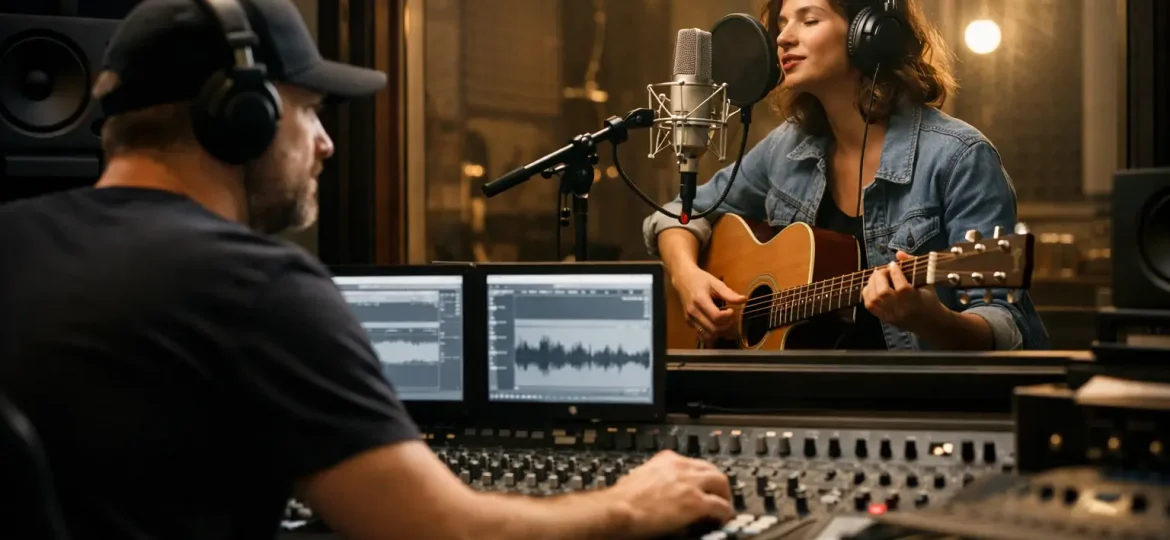
A great song can fall flat for reasons that have nothing to do with songwriting. The hook is there. The lyrics connect. The performance has heart. But if the arrangement drifts, the vocal sits wrong, or the energy never lifts when it should, listeners move on fast. That is where the right music producer for indie artists makes a real difference.
Independent artists usually do not need someone to simply press record. They need someone who can hear the gap between a rough idea and a finished release, then help close it without sanding off the artist’s identity. That takes technical skill, creative judgment, and the ability to work like a partner instead of a bystander.
What a music producer for indie artists actually does
A producer’s job is part creative direction, part project management, and part problem-solving. On one song, that might mean reshaping the structure so the chorus lands harder. On another, it could mean coaching a stronger vocal performance, tightening the rhythm section, or choosing sounds that support the message instead of crowding it.
For indie artists, the role often gets even broader. Many independent musicians are building a release without a label team, full-time manager, or outside A&R support. That means the producer is often one of the few experienced voices helping guide the record. A strong producer can help you make smart choices early, before you spend time and money chasing the wrong version of the song.
That does not mean a producer should take over. Good production is not about forcing every artist into the same sound. It is about pulling the strongest version of your sound into focus.
Why indie artists need more than studio time
A lot of artists start by looking for a room, a microphone, and a rate they can afford. That is understandable. Budget matters. But if you book time without a clear production plan, sessions can get expensive fast.
Studio access alone will not fix a weak arrangement, an under-rehearsed performance, or a song that needs another writing pass. A producer helps you catch those issues before they turn into wasted sessions. Sometimes the most valuable part of production happens before recording starts.
This matters even more if you are releasing music consistently. Indie artists do not just need one good song. They need a repeatable process that helps them create stronger work over time. The right producer helps build that process.
How to tell if a producer is the right fit
Not every talented producer is the right producer for your project. Fit matters. Chemistry matters. Communication matters.
Start with how they listen. Do they ask about your influences, your audience, and what you want the track to do? Or do they jump straight into telling you what they would change? Confidence is good. So is direction. But a good fit starts with understanding your vision before reshaping it.
Next, pay attention to whether they can talk about music in a way that is useful to you. Some artists speak in technical terms. Others describe sound in emotion, color, or references. A producer for indie artists should be able to meet you where you are and translate your ideas into decisions that improve the record.
Then there is the question of taste. This is harder to measure than gear or credits, but it matters more. You want someone whose instincts line up with what you are trying to build. If your music lives on intimacy and storytelling, you may not want production that feels oversized and glossy. If your sound depends on impact and energy, a subtle producer may not push hard enough. Neither approach is wrong. It depends on the record.
The best producer for indie artists helps shape the song first
A polished mix cannot save a song that never fully comes together. That is why strong producers spend time on foundations.
Sometimes that means adjusting the arrangement so each section earns its place. Maybe the intro is too long. Maybe the second verse loses momentum. Maybe the bridge should strip back instead of stacking more layers. These are not small decisions. They change how the listener experiences the song.
It also means looking honestly at performance. A vocal take can be in tune and still feel disconnected. A guitar part can be tight and still not carry the emotion it should. A producer’s value is not just hearing whether something is correct. It is hearing whether it works.
For indie artists, this kind of support is especially important because many songs begin in bedrooms, rehearsal rooms, and voice memos. The raw idea may be strong, but raw is not the same as release-ready. The producer helps bridge that gap.
Production is also about momentum and accountability
One challenge independent artists face is finishing. Songs get started, revised, shelved, reopened, and stalled. A producer can help create forward motion.
That might look like setting a realistic recording plan, deciding what needs to be tracked live versus built in layers, or keeping the project moving when perfectionism starts slowing everything down. Creative work needs room, but it also needs deadlines.
This is one reason a collaborative studio experience matters. When you are working with someone who is invested in the outcome, there is more focus in the room. You are not just renting equipment. You are building toward a finished piece of work.
What to expect from the process
Most indie artists benefit from a production process that starts before the session clock does. That early stage may include song review, demo feedback, arrangement notes, and a conversation about sonic direction. If a producer skips all of that and goes straight to tracking, there is a good chance the project will be less efficient than it should be.
Recording comes next, but it should never feel mechanical. A strong producer knows when to keep pushing for a better take and when the right performance is already there. Chasing perfection can drain the life out of a song. Settling too early can leave it underpowered. The line is not always obvious, which is why experience matters.
After tracking, production continues through editing, sound choices, layering decisions, and preparation for mixing. Every stage should serve the same goal: making the artist sound clear, confident, and fully realized.
For some artists, video also becomes part of that same release strategy. That can be a major advantage when audio and visual planning happen under one creative roof. Instead of building the song first and figuring out the visual identity later, you can shape both with a more consistent direction from the start.
Local matters more than people think
There is nothing wrong with remote collaboration. It works well in a lot of cases. But for many indie artists, especially those still developing their sound, local production can make the process stronger.
Being able to sit in the room, try ideas in real time, and build trust face-to-face often leads to better work. It is easier to capture honest performances when the environment feels comfortable and focused. It is also easier to solve problems quickly when everyone is present and invested.
For artists in the Houston area, working with a local producer can also simplify the bigger picture. Recording, production, and visual content often need to move on similar timelines. When those pieces are coordinated close to home, the process tends to be more efficient and less fragmented.
Choosing value over the lowest rate
Every indie artist has to watch costs. That is real. But cheapest is not always most affordable.
A lower hourly rate can still cost more if the sessions drag, the guidance is weak, or the final result does not hold up. On the other hand, paying for thoughtful production can save money by helping you avoid bad decisions, redo fewer parts, and get to a stronger final release faster.
The better question is not just, “What does this session cost?” It is, “What am I getting for that investment?” If the answer includes creative input, honest feedback, technical quality, and a producer who helps you finish with confidence, the value is much higher.
That is the kind of support artists look for when they want more than a recording room. At True Songs Productions, that hands-on approach matters because the work is built around helping artists turn ideas into finished songs and strong visual content, not just filling studio hours.
When a producer can change your trajectory
The right producer will not manufacture talent that is not there. But they can absolutely help a real artist present their work at a higher level. That can change how listeners respond, how confidently you release music, and how seriously your catalog is taken.
It can also help you develop faster. Every session teaches you something about writing, performance, arrangement, and decision-making. Over time, those lessons compound. You do not just leave with a better song. You leave as a better artist.
If you are serious about your music, look for a producer who hears both the song you brought in and the one it could become. That kind of collaboration is where independent records stop sounding unfinished and start sounding ready.
