

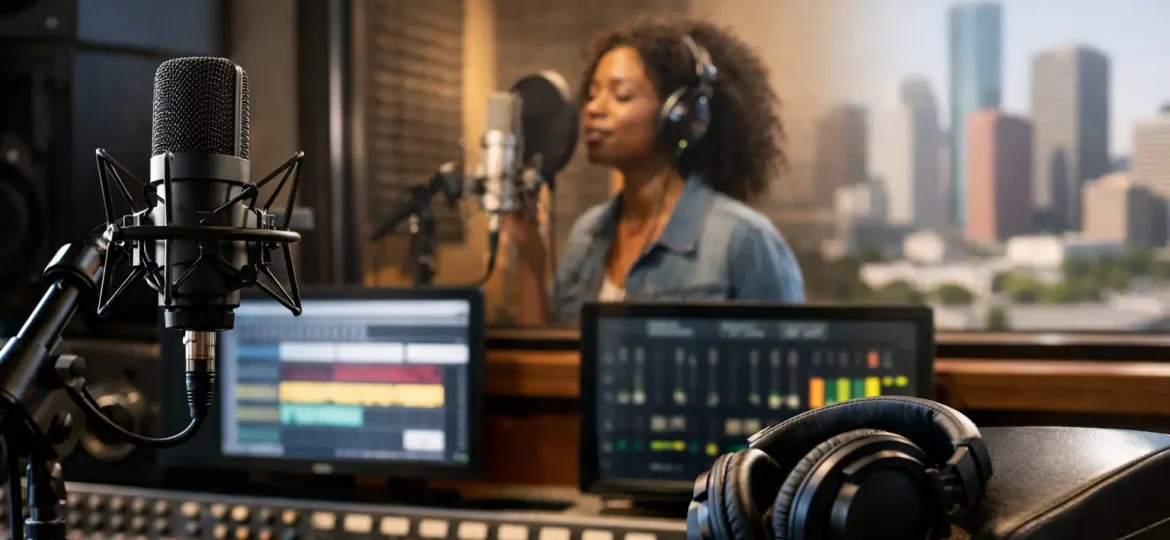
A great vocal take can carry an entire song. A weak recording can flatten it fast. If you’re looking for a vocal recording studio Houston artists can rely on, the real question is not just where to record – it’s where your voice will actually be captured, shaped, and presented the right way.
That matters whether you’re cutting your first single, tracking hooks for a rap record, recording demos for publishers, or finishing a project that’s already halfway there. The room, the engineer, the production approach, and the way a studio works with you all affect the final result. Good gear helps. Good ears matter more.
What a vocal recording studio in Houston should actually offer
A lot of people start by asking about microphones, interfaces, and hourly rates. Those things count, but they are not the whole story. A strong vocal session depends on whether the studio can help you deliver a performance that feels natural, confident, and mix-ready.
That starts with the recording environment. A vocal booth or treated room should control unwanted reflections, room noise, and distractions. If the room is too live, too noisy, or poorly treated, your vocals may sound harsh, hollow, or amateur before mixing even begins.
The second piece is the engineer or producer. A good vocal recording session is not just someone pressing record. It’s someone who knows how to set gain correctly, choose the right signal chain, coach timing and phrasing when needed, and help you get multiple usable takes without draining your energy. Some artists need quick direction. Others need space. The right studio knows the difference.
Then there is workflow. If you are spending half your paid time troubleshooting headphones, fixing latency, or repeating takes because nobody is organized, the session can get expensive without producing much value. A professional studio should make the process feel focused and efficient.
Not every singer needs the same studio experience
This is where a lot of booking decisions go wrong. The best vocal recording studio Houston has for one artist may not be the best fit for another.
If you’re an experienced vocalist who comes in prepared, you may want a studio that moves quickly and stays out of the way. If you’re newer to recording, you may need more hands-on support with comping, punch-ins, harmonies, and performance coaching. If you’re a songwriter, you may want someone who can help shape the song itself, not just record what is already there.
That difference matters. Some studios are built around engineering only. Others are more collaborative and production-driven. Neither model is automatically better. It depends on what stage your project is in and how much creative input you want.
For many independent artists, the sweet spot is a studio that can do both – capture a clean, professional vocal and help develop the record when needed. That is especially useful when you’re trying to build a full release, not just collect raw files.
Sound quality is more than expensive equipment
It is easy to assume that better gear guarantees a better vocal. In practice, the chain is only as good as the person using it and the singer in front of it.
A quality microphone should match your voice. Bright microphones can flatter some singers and make others sound brittle. A warm signal chain can help smooth certain tones, but it can also muddy a voice that already lacks edge. There is no single best mic for every session.
The same goes for processing. Light compression on the way in can help control peaks. Too much can kill the life in a performance. Tuning can tighten a vocal. Overdone tuning can strip out personality fast. Good production is about judgment, not just tools.
That is why communication matters before you ever step into the booth. A studio should ask what you’re recording, what style you’re aiming for, whether you already have a beat or instrumental, and what kind of finish you need. A rough demo, a release-ready single, and a vocal for video content all call for a different approach.
Questions worth asking before you book
Before you commit to a session, it helps to ask practical questions that tell you how the studio works. You do not need a long checklist, but you do need clarity.
Ask what is included in the session rate. Some studios charge strictly for tracking time. Others include light editing, vocal comping, or production guidance. Ask whether mixing is separate. Ask how many revisions are typical if you’re booking a full production or mix.
You should also ask how the studio handles session prep. Can you send files in advance? Should your instrumental be bounced a certain way? If you are recording to a beat from another producer, can they accommodate that efficiently? Small details like this can save you time and money.
Finally, ask about support during the session. If you need help with arrangement ideas, doubles, harmonies, or layering, is that part of the experience? If the answer is no, that is not necessarily a dealbreaker. It just means you should know what role the studio is actually playing.
Why creative support can change the final record
Many artists think they only need a room and a mic until they hear the difference a producer makes. The right producer can help tighten lyrics, adjust melody choices, shape ad-libs, and build a more convincing vocal arrangement. That is often the difference between a track that sounds recorded and one that sounds finished.
This is especially true for newer artists and independent singers who may not have a label team, vocal producer, or songwriter in the room. Working with a studio that offers real collaboration can shorten the gap between your idea and a polished release.
That collaboration should still feel respectful. A strong producer does not force every artist into the same sound. They help bring out what makes your voice and song work. Sometimes that means pushing for another take. Sometimes it means knowing the take you already have is the one.
If you need video too, think bigger than the session
A vocal release rarely lives as audio alone anymore. If you are planning a single, promo rollout, performance video, or full music video, it helps to work with a team that understands the full picture.
This is where an all-in-one production setup can save time and reduce friction. Instead of recording in one place, shooting visuals somewhere else, and trying to keep your branding consistent across different vendors, you can build the project with one creative team from the start.
For artists in the Houston area, that can be a real advantage. One studio, one point of contact, and one production partner can make the process cleaner, especially when deadlines are tight or budgets have to stretch. True Songs Productions is built around that kind of hands-on workflow, combining recording and video production under one brand for artists who want both quality and momentum.
Budget matters, but cheap sessions can cost more later
Every artist has a budget. That is real. But there is a difference between affordable and expensive-for-what-you-get.
A low hourly rate can look attractive until you realize the session moves slowly, the files need repair work, or the final vocal still lacks the quality needed for release. Then you end up paying another studio to fix problems that should have been avoided in the first place.
The better question is what kind of value you’re getting per hour. Are you leaving with usable takes, solid direction, and a recording that can move cleanly into mixing? Or are you just renting time in a room?
That does not mean every project needs premium, full-service production. Some artists genuinely only need efficient tracking. But if you want a stronger record, it usually pays to work with people who can hear the bigger picture.
How to know you’ve found the right fit
The right studio will make you feel prepared, not pressured. You should know what you’re booking, what the session will cover, and what kind of support you’ll get. You should also feel like the people on the other side care about the result, not just the time slot.
Pay attention to how a studio communicates before the session. Are they clear? Do they answer practical questions? Do they seem interested in your project, your goals, and your sound? Those early conversations often tell you a lot about how the session will go.
A good vocal recording studio should help you sound better than you do in your bedroom setup, of course. But the best one will also help you perform better, make smarter creative choices, and leave with something you are proud to release.
If you’re serious about your next song, look for a studio that gives your voice more than a microphone. Look for a team that can hear the record you’re trying to make and help you get there.
