

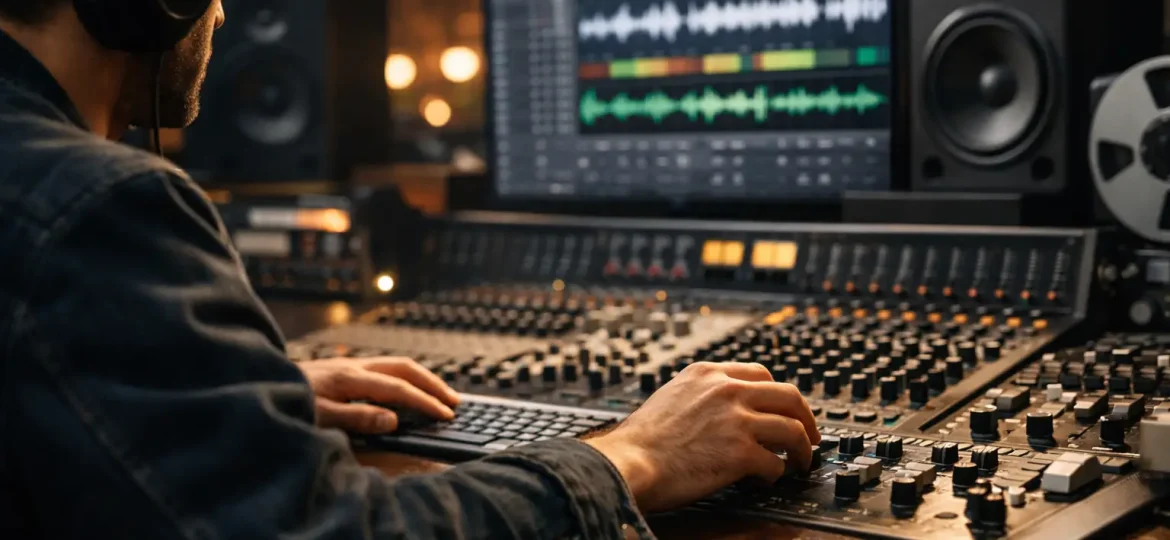
A great song can lose people in the first 15 seconds if the vocals feel buried, the low end is muddy, or the whole track sounds smaller than everything else in the playlist. That is exactly where mixing and mastering services make the difference. They take a recording from promising to professional, so your music connects the way it should.
For a lot of independent artists, the gap is not the songwriting. It is the finish. You can have a strong hook, a real message, and a solid performance, then still end up with a track that does not hit hard enough in the car, feels thin on headphones, or falls apart when compared to released music. Good production helps. Good recording helps. But the final polish comes from the mix and the master.
What mixing and mastering services actually do
Mixing is where the individual parts of a song are shaped to work together. Vocals, drums, bass, keys, guitars, ad-libs, effects, and backgrounds all need space. The engineer adjusts levels, EQ, compression, reverb, delay, panning, automation, and tone so the song feels balanced and intentional.
This is where your lead vocal can move from sounding flat to sounding present. It is where the drums gain punch without overpowering the record. It is also where small issues get exposed. A guitar part that felt fine in tracking might clash with the vocal once everything is stacked together. A bass line might sound strong by itself but crowd the kick once the whole beat is playing.
Mastering is the final stage. It prepares the mixed song for release by refining overall tone, loudness, consistency, and translation across different listening systems. A good master helps your song hold up whether someone hears it on studio monitors, earbuds, a Bluetooth speaker, or in the car.
The two stages work together, but they are not interchangeable. If the mix is weak, mastering cannot magically rebuild it. Mastering can enhance a strong mix. It cannot rescue every problem that should have been fixed earlier.
Why mixing and mastering services matter more than artists think
Listeners may not know the technical terms, but they know when a song feels finished. They hear when the vocal sits right. They notice when the beat knocks without turning into distortion. They feel the difference between a track that sounds homemade and a track that feels ready for release.
That matters even more now because your music is rarely heard in isolation. It sits next to commercial releases on streaming platforms, social clips, playlists, and shared posts. If your track is noticeably quieter, harsher, cloudier, or less controlled, people may skip before they even realize the song itself is strong.
There is also a credibility factor. When your sound is polished, people take the record more seriously. That includes fans, venue owners, collaborators, media contacts, and playlist curators. A finished sound tells people you care about the work and that you are ready to be heard.
The difference between a rough mix and a release-ready track
A rough mix can be useful. It helps you review the song, catch arrangement problems, and decide what still needs attention. But a rough mix is usually not built for release. It often has uneven vocal placement, frequency buildup, inconsistent effects, and limited depth.
A release-ready track sounds stable. The record has focus. The chorus opens up the right way. The verse leaves room for the lyric. The low end feels controlled instead of loose. The top end adds brightness without becoming sharp.
That kind of result usually comes from decisions, not presets. Every song needs its own approach. A clean R&B vocal needs different treatment than an aggressive rap performance. A live band arrangement needs different spacing than a minimal trap beat. Good engineers know when to push for energy and when to leave space.
What to expect from professional mixing and mastering services
The best experience is not just technical. It is collaborative.
A strong engineer listens for the goal of the song, not just the files. Is the vocal supposed to feel intimate or larger than life? Should the drums sound raw or polished? Is this record built for streaming, live performance promotion, social content, or an EP release? Those answers shape the work.
You should also expect honest feedback. Sometimes the best move is not another plugin. It is a better vocal take, tighter background vocals, a cleaner edit, or a stronger arrangement choice. A studio that is invested in the final outcome will tell you that.
That is one reason artists often benefit from working with a hands-on production team instead of treating the process like a simple upload and download service. Technical quality matters, but so does having someone in the room who understands performance, song structure, and the sound you are trying to build.
When cheaper is fine and when it costs you
Not every song needs an expensive, high-gloss treatment. If you are making a quick demo, testing a concept, or building a writing catalog, a simple mix may be enough. There is no reason to overspend on a draft.
But if you plan to release the track publicly, pitch it, perform around it, or use it to represent your brand as an artist, cutting corners usually shows. Cheap mixing often means generic settings, limited communication, rushed revisions, and a final product that sounds technically acceptable but emotionally flat.
That does not mean the most expensive option is automatically the best. It means value comes from attention, judgment, and experience. You want someone who can hear what is getting in the way of your song and fix it without sanding off the character that made it worth recording.
How to know your song is ready for mixing and mastering services
Artists sometimes send songs too early, then wonder why the final version still feels off. Mixing works best when the production and recording stages are already solid.
Your song is usually ready when the arrangement is set, the best takes are chosen, timing issues are cleaned up, and the files are organized. The more complete your prep is, the more the engineer can focus on making the song feel powerful instead of doing avoidable repair work.
It also helps to be clear about your vision. Reference tracks can help if you use them the right way. You are not asking for a copy. You are showing the kind of vocal presence, drum impact, space, or energy you want. That gives the engineer direction without boxing the song into something it is not.
Why local collaboration still matters
Remote work is common, and sometimes it works well. But there is still real value in working with a local studio when you can. Communication tends to be clearer, revisions move faster, and you can solve creative problems in real time instead of through a long message thread.
For artists in the Houston area, that matters. If a vocal needs to be recut, a harmony needs to be added, or a production detail needs to be changed before the mix is finalized, having recording, production, and finishing support in one place saves time and avoids confusion. It also gives newer artists a better chance to ask questions and actually understand the process.
That creator-led approach is where a studio like True Songs Productions stands out. When the person helping shape the record is also musically involved, the result is often better than a purely technical handoff. The song gets treated like a song, not just a set of files.
Choosing the right mixing and mastering services for your music
Do not just ask what is included. Ask how the engineer works. Ask what kind of communication you can expect, how revisions are handled, and whether they are listening for both technical quality and artistic intent.
You also want to hear examples that feel relevant to your style. A great engineer does not have to work in only one genre, but they should understand what makes your kind of record feel finished. Clarity means something different in hip-hop than it does in singer-songwriter music. Loudness, space, and vocal treatment all depend on context.
Most of all, choose a team that respects the song. The goal is not to make everything shiny. The goal is to make the record hit the way it should.
If your track has the writing, the performance, and the message, do not let the finish be the weak point. The right mix and master can turn a good recording into a record people want to replay, share, and remember. When you are ready to sound as serious as you are, that final step is not extra. It is part of the music.
