

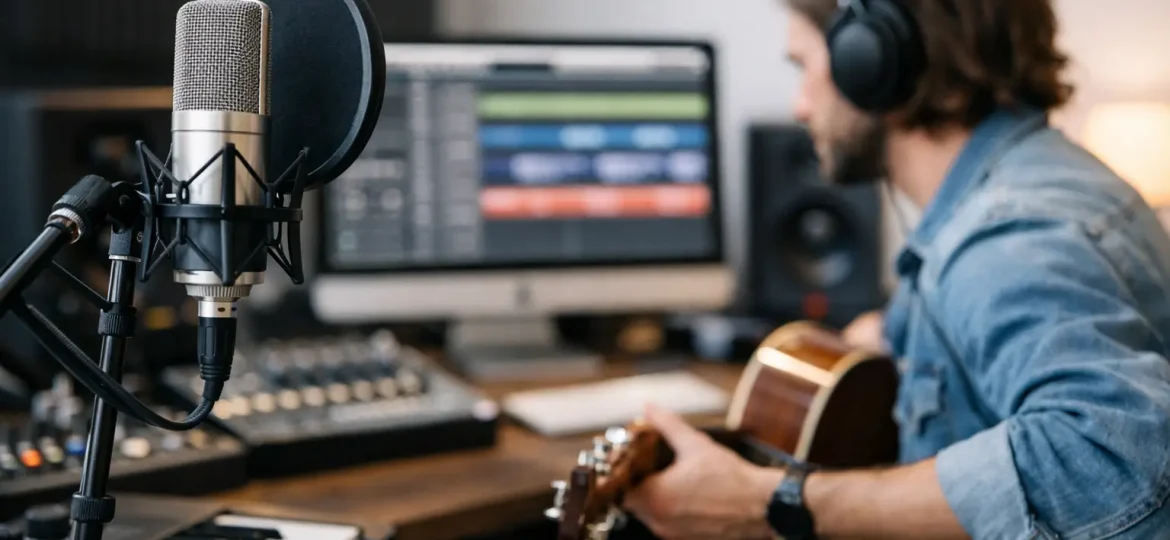
A demo has one job: make someone hear the potential in your song before they have every reason to believe in it. This complete guide to demo recording will help you make that first listen count, whether you are sharing a new song with a producer, pitching material to another artist, booking shows, or building momentum around your own release.
A strong demo does not need to sound expensive. It needs to sound intentional. The vocal should be clear, the song should be easy to follow, and the performance should communicate the feeling behind the lyric. Great production can come later. A clear musical idea cannot be added after the fact.
What a Demo Recording Needs to Do
A demo is not always a rough recording. It is a working version of a song that proves the writing, melody, arrangement, and performance are worth developing. How polished it should be depends on who will hear it.
If you are sending a song to a producer or co-writer, a well-recorded vocal and a simple instrument may be enough. If you are pitching to artists, managers, or music supervisors, the production needs to provide a more complete picture of the finished track. If you plan to use the song on social media or to book opportunities, it should sound close enough to release quality that people can hear your standard.
The mistake is treating every demo like a final master or, on the other side, assuming a phone recording will carry a great song on its own. The right level is the one that serves the next step.
Start With a Clear Recording Goal
Before setting up a microphone, decide what this demo is for. That choice affects your budget, arrangement, session time, and production decisions.
A songwriter demo is built around the song itself. The lyric, melody, chords, and vocal delivery should be front and center. A performance demo may need more energy, tighter live-style instrumentation, and a vocal that shows range and personality. A production demo is where you begin establishing the sonic world: drum sounds, textures, transitions, and the overall genre direction.
Choose one or two reference songs that sit near your target. Do not try to copy them. Use them to identify useful details: how dry or spacious the vocal feels, how the drums enter, how long the intro lasts, or how much energy the chorus adds. A reference gives everyone in the room a common language and keeps the session focused.
Prepare the Song Before You Record
Studio time moves quickly when the songwriter knows the song. Finish the lyric as much as possible, confirm the key, and make sure the structure is settled before you begin tracking. A last-minute lyric adjustment is normal. Rewriting the entire second verse while the microphone is open can drain momentum and budget.
Practice with a metronome, even if the final demo will feel loose or acoustic. Knowing the tempo helps you build clean edits, add programmed drums, and bring in other musicians later. If the song changes tempo naturally, map those moments in advance rather than hoping everyone follows the same feel.
Bring a lyric sheet with the sections labeled: intro, verse, pre-chorus, chorus, bridge, and outro. Note any harmony ideas, instrumental hooks, and dynamic changes. You do not need formal notation. You do need a clear plan that lets you spend the session making creative choices instead of trying to remember what comes next.
Pick the Right Key for the Vocal
The key is one of the biggest quality decisions in a demo. A song can be technically singable and still sound strained, thin, or emotionally flat. Test the chorus several times before recording. If the highest notes force you to push, drop the key. If the verses sit too low to carry feeling, raise it.
Do not pick a key because it works on guitar shapes or because another artist recorded in that key. The demo should support your best performance. A confident vocal is more persuasive than a difficult key played perfectly.
Build the Arrangement Around the Song
Start simple. For many songs, a guide vocal and one rhythm instrument are enough to establish the foundation. From there, add only what improves the listener’s understanding of the song.
The verse should leave room for the story. The chorus should feel like a lift, whether that comes from fuller chords, added drums, vocal harmonies, bass, or a stronger rhythmic pattern. An instrumental hook can help make the song memorable, but it should not compete with the lyric.
Avoid adding sounds just because they are available. A demo packed with pads, effects, guitar parts, and percussion can feel impressive for the first 20 seconds, then hide the central idea. If you mute a part and the song loses nothing, it may not need to be there.
For artists recording in genres with recognizable production expectations, a more developed track may be the better choice. Pop, hip-hop, R&B, country, and rock demos often benefit from a convincing groove and a finished arrangement. Acoustic, folk, and singer-songwriter material may earn more trust by keeping the performance direct. It depends on the song and the audience.
Record Performances, Not Just Tracks
Technical quality matters, but listeners remember emotion. Before recording vocals, spend a few minutes getting comfortable with the headphone mix. You should hear the track clearly without fighting the volume, and your vocal should feel natural in the headphones. If you cannot hear yourself well, you will often oversing or lose pitch.
Record more than one full vocal take. The first pass may have the most energy. A later pass may have cleaner phrasing or better control. Recording several options gives you material for comping, which means selecting the best moments from different takes to create one strong lead vocal.
Do not chase perfection until the vocal loses its life. A slightly gritty note or a breath before an important line may be part of what makes the performance believable. Fix distractions, timing issues, and pitch problems that pull attention away from the song. Keep the human moments that make the lyric feel lived in.
The same principle applies to instruments. Track a clean, steady foundation first. Then add doubles, hooks, fills, and color parts. If you are recording guitar, check tuning between takes. If you are programming drums, make the rhythm feel played rather than mechanically identical. Small changes in velocity and timing can add movement without sacrificing precision.
Edit With Purpose, Then Mix for Clarity
Editing should make a demo easier to hear, not turn it into something artificial. Tighten obvious timing problems, remove unwanted noise, and clean up distracting breaths or clicks when needed. Align doubled vocals and backing parts so they reinforce the lead instead of creating blur.
Mixing begins with balance. Get the lead vocal at the right level first, then shape the instruments around it. If the listener cannot understand the words, the demo is not doing its job. Use EQ to reduce clashing frequencies, compression to control uneven levels, and reverb or delay to create a sense of space.
Be careful with effects. Heavy tuning, wide reverb, or aggressive processing can make a demo sound less professional if it does not fit the genre. Check your mix on studio monitors, headphones, a car system, and a phone speaker. If the vocal disappears on a phone or the bass overwhelms everything in the car, adjust before sending it out.
Leave headroom in the final mix. A demo that is crushed for loudness can sound harsh and tiring. Clear, balanced audio will usually make a better impression than a track that is simply louder.
Export Files That Make Collaboration Easy
Save the final demo as a high-quality WAV file and a shareable MP3. Keep an organized project folder with the lyric sheet, tempo, key, chord information, and any notes about the arrangement. Name files clearly with the song title and version, such as Song Title – Demo Mix 1.
If you expect another producer, mixer, or musician to work on the song, export individual stems or consolidated tracks from the same starting point. Include the dry lead vocal, backing vocals, drums, bass, guitars, keyboards, and any important effects tracks. A clean handoff avoids hours of confusion later.
When you are ready for help beyond a basic demo, work with people who can hear both the technical and creative side of the song. At True Songs Productions, that means building from the artist’s original idea while offering practical production input that helps the record connect.
The best next move is simple: choose one song, define where it needs to go, and record the version that gives it a real chance to get there. A clear demo turns a private idea into something people can hear, share, and help you build.
