

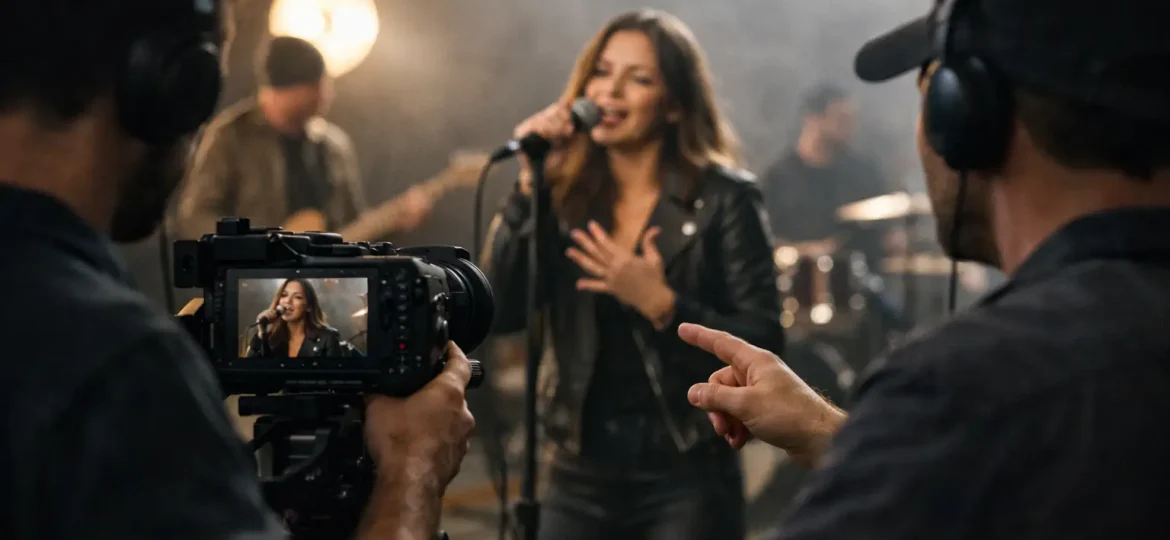
A performance video can have great lighting, sharp camera work, and a strong song, then still fall flat because the artist looks like they are waiting for the next lyric. Learning how to direct performance videos means getting past “stand here and lip-sync” and helping the performer communicate something real through the camera.
The best performance videos feel immediate. The audience should believe the artist is delivering the song to someone, even when the set is empty except for a camera, lights, and a playback speaker. That takes planning, trust, and clear direction that leaves room for personality.
Start With the Song, Not the Shot List
Before deciding on lenses, locations, or camera movement, listen for the emotional engine of the track. Is the artist trying to win someone back? Celebrate a breakthrough? Tell a story with anger, confidence, grief, or humor? A performance without a defined emotional point of view usually becomes a collection of random poses.
Ask the artist what the song is about in one plain sentence. Then ask who they are singing to. Their answer gives you a useful performance target. A love song may be directed toward one person just beyond the lens. A high-energy rap verse may be directed at the audience, a rival, or the artist’s former self. Those choices change the eyes, posture, pacing, and intensity.
Listen for the song’s landmarks too: the first line, the pre-chorus build, the hook, a beat switch, a bridge, and the final chorus. These are natural places to change framing, movement, lighting, or performance energy. You do not need a new visual idea every four bars. You need the right moments to feel bigger.
Build a Simple Performance Concept
A strong concept gives the artist something to do emotionally and physically. It does not have to be complicated. A stripped-down studio setup can look powerful when it has intention: one artist, a hard backlight, direct eye contact, and a camera that moves closer as the chorus opens up.
Choose a visual direction that supports the record rather than competes with it. A reflective song may need slower movement, space around the artist, and moments where they look away from the lens. A club track may call for tighter coverage, forward motion, bolder color, and more direct engagement. The goal is not to follow rules. It is to make the image feel like the music sounds.
Talk through wardrobe and blocking before the shoot begins. Clothing affects movement, color, and how the artist reads on camera. Blocking determines whether the performer has a reason to move or is simply wandering around a set. If an artist crosses the room, steps into a light, sits at a piano, or approaches the lens, give that movement a purpose tied to the song.
Give Direction the Artist Can Actually Use
“Be more natural” is not useful direction. Neither is “give me more energy” without explaining where that energy should go. Artists often need specific, playable notes that they can act on during the next take.
Try direction like: “Deliver that first verse like you are holding back what you really want to say.” Or: “On the hook, look straight through the lens like you know the audience already believes you.” For a more aggressive section, you might say, “Take two steps toward camera on that line, then stay planted and let the words do the work.”
Give one or two notes at a time. Too many corrections can make a performer self-conscious, especially if they are new to video. Get a clean baseline take first. Then use later takes to explore contrast: one restrained, one direct, one bigger, one more playful. Editing becomes much easier when you have choices instead of five versions with the same emotional level.
It also helps to separate lip-sync accuracy from performance intensity. On the first run, make sure the artist knows the playback version and is hitting every lyric cleanly. Once the timing is solid, direct the face, body language, and eye line. If you correct everything at once, the artist may lose the feeling of the song while trying to remember every technical note.
Protect the Artist’s Confidence
A director sets the energy on set. If the artist misses a word or feels awkward in the first take, do not make it a big moment. Most people need time to settle in front of a camera. Keep communication calm, positive, and honest.
Show a strong clip early when it will help build confidence. A quick playback can prove that the lighting, framing, and performance are working. But do not stop after every take to review footage. Too much review slows the session and can pull the artist out of the performance.
Direct Camera Movement With Purpose
Camera movement should react to the song and performance, not announce itself. A slow push-in can make a lyric feel more personal. A handheld move can add urgency. A locked-off frame can make a still performer feel powerful. The choice depends on the record and the artist’s comfort in front of the lens.
For most performance videos, get coverage that gives the edit room to breathe. Capture a wide shot for body movement and location context, a medium shot for natural performance, and close-ups for emotional lines and hooks. If possible, repeat the full song in each setup rather than filming only selected phrases. Full takes protect you from continuity problems and make it easier to build momentum later.
When moving the camera, make the performer’s movement and your movement work together. If the artist walks toward camera, consider backing up with them or letting them enter a tighter frame. If they stay still for an intimate line, a subtle push-in may add more than a dramatic orbit. Big moves are effective when the music earns them.
Watch the eye line closely. Looking into the lens creates connection. Looking just off-camera can feel more cinematic or private. Looking down can signal reflection, but too much of it disconnects the audience. Decide when each eye line belongs in the song and coach it deliberately.
Plan for Playback, Sync, and Multiple Takes
Performance footage lives or dies in the edit if the lip-sync is off. Use the final approved audio track for playback, not a rough mix that may later change. Make the track loud enough for the artist to perform confidently, while keeping communication possible on set.
Start each take in a way that gives the editor a clear sync point. The opening beat, a slate, or an audible cue can help. Keep notes on the best takes and standout moments so you are not hunting through every clip later. A simple take log saves time, especially when shooting several setups in one day.
Do not assume one flawless full take is the goal. Most polished music videos are built from different moments: the strongest close-up from take three, the best wide performance from take five, and a spontaneous gesture that happened once near the end of the day. Your job is to create enough structure that those moments can be used together.
Know When to Push and When to Simplify
Some artists come alive with detailed choreography and camera marks. Others perform best when you give them a clear zone, play the song, and let them respond naturally. Directing is not about forcing every artist into the same process. It is about recognizing what helps this performer deliver their best work.
If the artist is stiff, simplify the setup. Use one camera position, one emotional target, and one section of the song. Once they find the feeling, expand from there. If they are already expressive, avoid over-directing them into something polished but less believable.
At True Songs Productions, we approach performance direction as part of the production, not an afterthought. When the artist understands the song, trusts the set, and has clear guidance, the result does more than look professional. It gives listeners a reason to stay with the video until the final frame.
